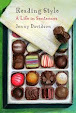
He would produce pink milk for breakfast or make jelly with hundreds and thousands suspended in the gelatine.
'He would make the most mundane thing seem fantastic because he would reinterpret it.' On a trip to Zurich to meet Dahl's European literary agent, they caught a funicular railway and noticed that each time the train stopped at a certain platform, the driver would get out, put his hand up into a ceiling beam and pull out a part-smoked cigar. 'He lit it, had two puffs, put it back and got back into the train to drive down again,' says Felicity. 'All day he did this - up and down. When we got back to the city, Roald bought the most expensive Monte Cristo cigar. We went back up the funicular. At the platform, he took the old stubby cigar out and put the new one up in the beam. Then we went back to the hotel. He didn't wait to see the driver's reaction. That's the sort of guy he was. He was always looking to help people and just make their day a little more interesting, because most people's days were very dull.'
Sunday, November 09, 2008
Pink milk for breakfast
An elegiac piece, by Elizabeth Day for the Observer Review, about Roald Dahl's widow:


The look and feel of the seventies
Phil Nugent on life lived through the movies:
Watching movies on late night TV is one of my two big hobbies, one of the things that settle and restore my soul. The other is standing by the barbed wire fence that separates our front yard from what had been the cattle field before we stopped raising cattle, and watching the road on the far side. It's a long way away. The road bracketing the field forms an upside-down "L" that I can watch cars move along. Not constantly; maybe not even all that often. The waiting is part of the excitement. Wait long enough, and you'll see a tiny car moving along, heading for the crossroads. If the car turns right, it'll head down the upper length of the inverted L, towards the turnoff that might lead it down the driveway to our house. If that happens, my heart will almost stop--maybe it's the Manson family, busted out of jail and on their way to let us know what they think of all the smart remarks my mother and I made watching Helter Skelter together. Because there's a big old barn blocking my line of sight, if the car keeps driving I won't see it; the car will disappear behind the barn, and then I have to gulp and wait, wait, to see if eventually the car will come tearing down out driveway, delivering certain doom.
Saturday, November 08, 2008
Friday, November 07, 2008
Temples of books
At the Times Online, Simon Callow has a lovely piece on falling in love with the London Library:
1. My English grandfather purchased a lifetime membership to the London Library in the early 1950s. He was very pleased when he contemplated (he lived well into his 90s) what good value for money he'd obtained thereby, but my frugal grandmother grumbled that there really should be a way for him to pass it on to me, perhaps in his will!
2. One of the best novels I have ever read about a librarian is Garth Nix's lovely Lirael; it is also just one of my favorite novels of all time, librarianship regardless.
When I was a member of the National Theatre Company in 1979, working with Michael Kustow on performances of a speculative re-ordering of the published sequence of Shakespeare's sonnets, I was impressed by the number of arcane publications on the subject that he was able to lay his hands on, all distinguished by an elegant little red label saying “London Library”. I'd somehow never heard of the place. Kustow promised to take me along, and if I liked it to propose me for membership. To say that I liked it is a feeble understatement: I felt, in an almost literal sense, that I had come home. It was the Tate Library apotheosised. The building is discreetly tucked into a corner of St James's Square; the front doors used to give directly on to the reception area, filled with leather-bound catalogues and wooden bookcases going up to the high ceiling, with a phalanx of librarians toiling over returns, filling in dockets for books being withdrawn, dispensing the while erudite bibliographical information. There was nothing epic about this space: it was human and intimate and private, a sort of book brothel where all special needs and tastes could be catered to. Book located, one would penetrate into the library proper, where the real romance begins.Two further observations:
1. My English grandfather purchased a lifetime membership to the London Library in the early 1950s. He was very pleased when he contemplated (he lived well into his 90s) what good value for money he'd obtained thereby, but my frugal grandmother grumbled that there really should be a way for him to pass it on to me, perhaps in his will!
2. One of the best novels I have ever read about a librarian is Garth Nix's lovely Lirael; it is also just one of my favorite novels of all time, librarianship regardless.
Fighting with bicycles
At the Telegraph, Tim Martin on Neal Stephenson:
[F]or now he's instructing me, over a pint, about longsword-fighting, walking-stick self-defence and an Edwardian martial art that used a bicycle as a weapon. "When I was writing the Baroque Cycle," he says, "I had to write some swordfighting bits, and it became obvious to me that I was writing rubbish: there's nothing like writing something down to make it clear that you have no idea what you're talking about. So I started trying to get more information about rapier-and-dagger fighting, which got me onto the trail of what's known as historical European martial arts, or western martial arts.
"The premise is that we all know about the Chinese or Japanese martial arts; they have this quasi-mythical status now for people. But if you think about it, the Europeans must have had equally sophisticated martial arts and we just forgot them as soon as we invented guns. So people have been going through German and Italian manuscripts, that are kind of like longsword fencing manuals, and bringing this stuff back to life.
"So we'd mostly been doing longsword, in my little group," says Stephenson. Ropes of muscle on his forearms attest to this, as do the pictures online of a Stephenson-designed spring-loaded practice sword that flexes on impact to soften a blow. "But we became interested in cane-fighting, which was taught in London a hundred years ago or so as part of this school of Bartitsu, founded by EW Barton-Wright, a railway engineer who'd picked up ju-jitsu in Japan. And he brought in a Swiss guy called Vigny who'd taken informal methods of walking-stick-fu and codified them into a system called la canne: he taught the part of the curriculum which involved fighting with walking sticks." No way, I say. "Yeah. There's a whole curriculum over fighting with bicycles. Pictures of an Edwardian lady in a floor-length dress and a huge hat with flowers, riding primly down a country lane, and when a ruffian comes out she uses some trick with the bicycle to flatten him and rides off. It's great stuff. The bicycles we're not sure how to approach, but we've created a little assembly line to make rattan canes, with a knob on the end. But there's, you know, how to use a bicycle pump as a weapon. How to defend yourself with a parasol. Crazy."
"Perhaps there is a Lord somewhere"
At the Independent, James Woodward on British amateur horticulturalist Mike Hillard's success growing bananas in his Gloucestershire home:
The bananas bloomed in his hi-tech solar room, which stays between 10C and 16C above outside temperature all year, and is just warm enough for the east Asian crop to grow healthily.
Now Mr Hillard intends to fry them up in a tasty curry. He said: "This has all been done by the English sunshine in my solar room, which provides my house with an oxygen-rich atmosphere.
It has been called the most energy-efficient house in the world. I was surprised when they flowered because I was told, 'Oh they'll never grow fruit'. Now they are growing into a forest, and I've got seven babies. I asked the Royal Horticultural Society and they told me to get down on my prayer mat because they had been trying for years to get theirs to bear fruit. Mine have grown to four or five inches and they are edible.
"Perhaps there is a Lord somewhere who has done it too but I don't know where he is. It looks like a giant beehive and the trunk is full of water. You would call it a palm. The leaves grow about 5.5m up, nearly touching the roof."
He said that he would be cooking the bananas in a slap-up meal despite the RHS's warnings that the fruit will taste odd. He said: "I love bananas and will probably cook them like a plantain; they will be very nice fried with rice."
Great geniuses of literature
I have just had a great treat, namely rereading the first two volumes of Jo Walton's Farthing trilogy in preparation for a delightful light-readingish wallow in the third. The books are Farthing, Ha'penny and Half a Crown. (Previous Light Reading discussions here.)
These really are the perfect books - the obvious comparisons are to recent literary WWII-related alternate histories by Philip Roth and Michael Chabon, but they are so beautifully inflected with the whys and wherefores of some of my utter longtime favorites that reading them is like being magically given fresh new books by writers I have reread almost to death (Josephine Tey, Dorothy L. Sayers, Peter Dickinson). I think the first book in the trilogy is still my favorite, but these books are just delightful...
(Attentive readers will note that Walton includes, in this final volume, the gym shoes with rosettes from Miss Pym Disposes! And a number of other nods to other fictions of the time - I was thinking in particular, at the end, of Scott's Heart of Midlothian...)
Thursday, November 06, 2008
Wednesday, November 05, 2008
Flies, ointment
I am having a relaxing week out of town - unfortunately marred by a modest but troublesome cold and some fairly bad weather! But life cannot be too bad when this afternoon I was greeted with this lovely spectacle (I was here, with Wendy, who took this delightful photograph - click to enlarge): 

Winter words
At the TLS, Ian Bostridge has a very interesting piece on the latest volume of Benjamin Britten's letters. Random funny detail:
Gloriana was one of the “great disasters of operatic history”, as George Harewood described it in his memoirs. With a libretto by Plomer (in one of cultural history’s more unexpected cross-currents, Plomer was the dedicatee of Ian Fleming’s Goldfinger, with an enthusiasm for things Japanese reflected as much in Britten’s later Noh play-influenced Curlew River, for which he wrote the libretto, as in the Bond thriller about a Japanese suicide garden, You Only Live Twice, which he edited), it was a deft interweaving of the public and private lives of Elizabeth I.
Tuesday, November 04, 2008
Sunday, November 02, 2008
The portfolio existence
At the FT, Gideon Rachman lunches with Alastair Campbell (site registration required), whose new novel I must confess I have rather a yen to read:
For the moment, Campbell is enjoying a portfolio existence. He is already at work on his second novel. He gives lectures. He makes television programmes. He gives advice on communications to a variety of clients, including the South African government. He works for charities – in particular, leukaemia research. He watches a lot of football.Bonus link: Jenny Diski's review of the novel for the LRB.
I, too, am a football fan, but, I tell him, I haven’t subscribed to any sports channels for fear that I will waste too much time watching them. Campbell not only watches Sky Sports, he has developed an interest in the fan channels run by individual football teams – even ones he doesn’t support. He warms to his theme: “I mean, for example, Celtic TV recently showed the entire 1967 European cup final. When Celtic won. The Lisbon Lions. The whole game. It was awesome.”
I am impressed by his devotion, but also slightly depressed (in the non-clinical sense). It seems odd for a man so full of energy and passion to be whiling away his time watching 40-year-old football matches on TV.
He claims to be enjoying the free time his new life offers him. But he admits that the lure of full-time politics could eventually draw him back: “I may wake up again one day, still in my early 50s, and say it’s time to start getting up at 5.30am again and working round the clock.”
"Oh shimmy!"
At the Telegraph, John Preston has an interesting though slightly bizarre piece on Jonathon Green's dictionary of slang:
Not altogether surprisingly, Green is a man at the outer edges of obsessiveness. An ebullient, helplessly loquacious 60-year-old, he has spent his life truffling through books, newspapers, movie scripts and comics looking for choice words or phrases to plunder. On the day we met, he was in a state of high excitement, having just turned up unexpected treasure in the bowels of the British Library - or what passes for treasure in Green's world.Also, a selection of new entries in the Chambers Slang Dictionary.
'While the word "shit" has been around since the 14th century, the expression "to take a shit" is a comparatively modern one,' he says in an earnest, scholastic sort of way.
'The Oxford English Dictionary has it down as dating from the early years of the 20th century. But my partner, Susie, who also acts as my researcher, was reading a book this morning published in 1705 in which there's a reference to "the Duchess of So-and-So taking a shit". So there, you see, we've pre-dated the OED by at least 200 years!'
"My grandmother wore a wig"
I am sorry it has been so quiet round here - too much running, not enough time at home frivolled away on the internet! Hoping to have a bit of blog-intensive down-time over the next few days, but in the meantime, a few tidbits...
Soliloquies in the bath!
Amanda Craig has a nice piece on Neil Gaiman at the Times Online.
If you are in New York and have a few dollars to spare (or even if you do not), go and see Wig Out! at the Vineyard Theater (through November 16). It is quite, quite lovely, a magical evening of theater - it gave me cause to reflect that though it and Cato could hardly be more different, they do have that thing in common that is something elusive and transformative that happens in theater alone and not in novels or poems or essays however delightful they may be. (Here is Ben Brantley's review for the Times.
(NB this show also gave me cause to reflect that the vampire balls in novels by Anne Rice and Laurell K. Hamilton could not exist without the culture of drag balls having been in place first. This play takes you into a richer alternate universe than any but the very best fantasy novels - interesting, it is a thing I rarely think about a play...)
Subscribe to:
Posts (Atom)