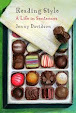
Danish chocolate maker Mikkel Friis-Holm of Friis-Holm produces two “dark milk” bars, one at 55 per cent cocoa solids, the other at 65 per cent. Having experimented with different beans and fermentation periods, Friis-Holm settled on a “full-bodied and tasty” cocoa from Nicaragua. What he wants from his dark milk bars, he says, is to move through creamy and caramel notes but “importantly to end up with cacao flavours”. This way, milk chocolate is no longer the “stepchild” of plain. “At first people bought it as if they had bought a naughty magazine,” laughs Friis-Holm. “They would hide it under the dark bars!”
Showing posts with label taste. Show all posts
Showing posts with label taste. Show all posts
Friday, April 17, 2015
Guilty pleasures?
At the FT, Jenny Linford on the "new milk chocolate" movement (FT site registration required - NB I am very happy with the old milk chocolate too):


Friday, June 06, 2014
Saturday, May 05, 2012
The spoon research group
At the FT, Fuschia Dunlop on the alchemy of cutlery (site registration required):
The sight of 15 adults sucking their spoons like babies was an unusual start to a dinner party, but they had surprisingly different flavours. Copper and zinc were bold and assertive, with bitter, metallic tastes; the copper spoons even smelt metallic as they gently oxidised in the air. The silver spoon, despite its beauty, tasted dull in comparison, while the stainless steel had a faintly metallic flavour that is normally overlooked. As Miodownik pointed out, we were not just tasting the spoons but actually eating them, because with each lick we were consuming “perhaps a hundred billion atoms”.
When the spoons were tasted with food, there were some surprising revelations. Baked black cod with zinc was as unpleasant as a fingernail scraped down a blackboard, and grapefruit with copper was lip-puckeringly nasty. But both metals struck a lovely, wild chord with a mango relish, their loud, metallic tastes somehow harmonised by its sweet-sour flavour. (“With sour foods, like mango and tamarind, you really are tasting the metal,” says Laughlin, “because the acid strips off a little of the surface.”) Tin turned out to be a popular match for pistachio curry. And Laughlin sang the praises of gold as a spoon for sweet things: “Gold has a smooth, almost creamy quality, and a quality of absence – because it doesn’t taste metallic.”I want to eat honey ice cream with a gold spoon...
Thursday, September 22, 2011
Light reading catch-up
I had such good intentions about making this a semester in which I would spread my work out evenly across the week, but in fact I worked so hard Sunday through Tuesday that I basically collapsed and could do nothing yesterday except exercise and read a novel (the first two thirds or so of Neal Stephenson's Reamde, on which my verdict so far is very similar to that of the Amazon reviewers - fun fast read, but there's not so much to it - it rather reminds me of Bruce Sterling's Islands in the Net - I prefer my female protagonists to have a more fully rendered interiority!). I must write comments on some assignments today, or Sunday will not be a pretty sight chez Davidson (I am doing a long swim on Saturday morning, one for which I am signally undertrained, and am not counting on any great level of mental acuity and application in the afternoon!).
Other light reading around the edges (really I feel I have had no time to read anything, but this is clearly a misapprehension of sorts, I seem to have read several novels): Marcus Sakey's excellent Chicago noir The Blade Itself; Erin Morgenstern's The Night Circus (quite reasonably good, but falling under the same rubric as what William Empson diagnoses as "the badness of much nineteenth-century poetry," explained by him as being "written by critically sensitive people [who] admired the poetry of previous generations, very rightly, for the taste it left in the head, and, failing to realise that the process of putting such a taste into a reader's head involves a great deal of work which does not feel like a taste in the head while it is being done, attempting, therefore, to conceive a taste in the head and put it straight on to their paper, they produced tastes in the head which were in fact blurred, complacent, and unpleasing"). Unfair as a description of, say, Tennyson's best poems, and in a similar respect perhaps slightly unfair to apply to Morgenstern, but there is something to the diagnosis (and in fact this is, curiously, what Morgenstern's novel is about/thematizes, as her circus is even more clearly than her novel trying to 'put the taste into a reader's head' without grounding it effectively in technique).
Closing tabs:
Guinea pig rentals! (Via Tyler Cowen.)
Things Apple is worth more than.
Friday, March 25, 2011
On frivolity
There is always much that is good in the FT's weekend arts section, but I think my favorite piece this week is Jancis Robinson's nearly mock-epic account of the 58th Varsity Blind Wine Tasting (site registration required). Reminds me of the Dorothy L. Sayers story "The Bibulous Business of a Matter of Taste"....
Friday, May 21, 2010
Strawberry Hill forever
At the TLS, Rosemary Hill on Horace Walpole's creation of Strawberry Hill and its gothick aesthetic.
The whole piece is very much worth reading, but I can't decide if I think this argument about punctuation is brilliant or over-ingenious:
A wide prevalence of misquotings is a natural byproduct of a culture in which readers are as likely to have access to versions of poems held in their memories as to the books in which they encounter them; here were some of John Haffenden's thoughts a few years ago on William Empson as a notorious misquoter, in the best tradition of Hazlitt and others.
I realize that I have not dipped into Walpole's correspondence since graduate school - time for another look, perhaps...
Bonus eighteenth-century link: at the Nation, Sam Moyn's devastating take-down of Jonathan Israel's A Revolution of the Mind: Radical Enlightenment and the Intellectual Origins of Modern Democracy.
The whole piece is very much worth reading, but I can't decide if I think this argument about punctuation is brilliant or over-ingenious:
Walpole’s love of display was as great as his love of mystery, and the public could apply for tickets to view Strawberry. What they were allowed to see, a daring mixture of styles and an apparent flouting of the principles of taste, was shocking enough to some. In the Preface to the Description, Walpole prepares the reader for Strawberry’s “heterogeneous” combination of “obsolete architecture . . . French porcelaine, and Greek and Roman Sculptures”, describing it as a mixture that “may be denominated, in some words of Pope, ‘A Gothic Vatican of Greece and Rome’”. Here once again, however, Walpole was playing tricks with the poet’s memory. Pope’s line, from the Dunciad, refers to the meretricious library of Bayes, the laureate of dullness. This collection of worthless volumes is not at all mixed; it is, as the lines read in the original: “A Gothic Vatican! of Greece and Rome / Well purg’d”. Walpole’s interference with the text is telling, for, whether it was Pope or Popery, literature or architecture, what he was concerned with was realizing his own ideas. The removal of Pope’s punctuation had a parallel in the collaging of medieval motifs in his house where Walpole used prints of Gothic tombs as models for his chimneypieces. The choir screen from old St Paul’s Cathedral gave his friend John Chute an idea for fitting out the library, and the exhibition includes Walpole’s copy of William Dugdale’s History of St Paul’s of 1658 with the relevant detail carefully snipped out.But what if it's not so much Walpole playing tricks with Pope's memory as Walpole's memory playing tricks on him? Pope's couplets do occasionally use enjambment to string a thought across a line break, as in the line quoted, but it is a sort of reversion to the mean when Walpole keeps the ringing and conclusive line-segregated phrase and omits the rest: in other words, it seems to me as likely to be an almost philistine opportunism (or a serendipitous misremembering, as the verb collaging suggests) than something over which Walpole himself would be likely to have had conscious awareness or control.
A wide prevalence of misquotings is a natural byproduct of a culture in which readers are as likely to have access to versions of poems held in their memories as to the books in which they encounter them; here were some of John Haffenden's thoughts a few years ago on William Empson as a notorious misquoter, in the best tradition of Hazlitt and others.
I realize that I have not dipped into Walpole's correspondence since graduate school - time for another look, perhaps...
Bonus eighteenth-century link: at the Nation, Sam Moyn's devastating take-down of Jonathan Israel's A Revolution of the Mind: Radical Enlightenment and the Intellectual Origins of Modern Democracy.
Sunday, April 25, 2010
Sunday miscellany
At Harvard Magazine, Jonathan Shaw has an interesting piece on the university library in the digital age.
The Literary Saloon on the unedifying behavior of Orlando Figes (this includes a good collection of links to pretty much all the coverage of the story as it broke - I do feel his behavior falls into the gray area between character flaws and mental illness, but not in a way that should let him off the hook...).
I saw an absolutely dreadful play last night (that link is to Ben Brantley's review of last year's earlier incarnation of the show) - as G. and I sat there stony-faced amidst a theater full of perplexingly appreciative fans, all I could think was that (a) the performer bore an unnerving resemblance to that very striking photograph of the young Erica Jong and (b) I could hardly imagine a play that more horrifyingly and profoundly offended against all of the canons of taste I hold dear. The high level of competency in performance and production only made it worse, really - I have been rereading Cintra Wilson recently, she is the prime commentator (perhaps with Andrew O'Hagan) on fame and narcissism and I wanted to read the truly scathing review she surely would write of this performance...
(But we had a delicious dinner afterwards at Esca - I had an amazingly succulent brodetto that was mussels, clams and scallops stewed in a white wine broth with fresh peas and sorrel, then a piece of seared yellowtail, and a rhubarb tart for dessert, all accompanied by a very good dry Riesling. It was a decadent and palate-pleasing meal that caused G. to comment that he thought it might be wise if he would switch from reviewing plays to reviewing restaurants!)
On the topic of Cintra Wilson, I will also note that a reread of Colors Insulting to Nature has reminded me that it is truly one of the funniest novels I have ever read. It has a sort of propulsive energy that makes the prose difficult to excerpt without sacrificing something of the appealing roughness, for which reason I offer a four-paragraph sequence from early in the book that shows something of its charms. The second paragraph seems to me perfectly crafted - look at the parenthesis (i.e. think how much less funny and ingenious it would be if the parenthesis started before the words "The worst was") and the pacing; there is no lingering, things move unrelentingly forward without any of that mugging for an audience response that is what is objectionable about much conventionally 'good' comic timing (see aforementioned dreadful play).
Anyway, here is the sequence, with apologies if it represents an infringement of copyright (basically I think everybody should buy this book and read it, alongside The Last Samurai!):
Johnny Budrone had been a promising rodeo bull rider in his youth until a particularly nasty throw crushed one of his vertebrae and tossed the muscles around it into a splintery melange he called "crabmeat." Peppy first saw him performing at the Lucky Seven club with his air gun act; with one in each hand, sporting a pair of yellow-tinted aviator-frame glasses, he would shoot a flurry of pellets into large, formless heaps of white balloons, loudly sculpting them into a kind of pneumatic topiary: rabbit heads, hearts, clubs, spades. The rest of the time he drank alone, a lot, to offset his constant back pain. Being another regular at Bil's Red Turkey, the solitary woman at the other end of the bar, who sometimes had jet-black hair, sometimes auburn, became a compelling enigma. One night Johnny was drunk enough to approach Peppy, who was wearing her Natural Honey Blonde wig, and drawl, "So what's your hair down there like, anyhow"--gesturing at her crotch with his Marlboro--"Neapolitan?"
It was not the best pickup line Peppy had ever heard, nor was it the worst. The worst was: "You wanna come in the john with me and put Bactine on my stump?" (Dan "Claw" Haverman, June 1974.) Johnny's line, at least, suggested a sexually viable man with an active, if tasteless, sense of humor.
Apart from the exploded veins, bowlegs, psoriasis, and gangrenous-looking assortment of blurring tattoos, Johnny was a handsome man, and Peppy felt a warm twinkling in herself that had almost nothing to do with the four or seven Fuzzy Navels she had consumed. The subsequent affair with Johnny Budrone was actually the closest she'd ever come to the kind of ovary-squeezing, sublimely unbearable, ice-cream headache-y love she had imagined as a hormonally exhilarated teen.
"That Johnny knew how to treat a lady," Peppy would sigh, later.
Tuesday, September 01, 2009
Happy monkey music
Species-specific music?
The researchers played each piece, as well as several samples of human music, for 14 tamarin monkeys that hadn’t heard music before. An independent observer recorded monkey behavior for five minutes before and after playing each selection. The monkeys didn’t respond at all to Nine-Inch Nails, Tool or Samuel Barber’s “Adagio for Strings,” but oddly enough, they did become slightly calmer after listening to “Of Wolf and Man” by Metallica.(I am certain there are more commercial applications in the Music for Cats business...)
Monday, April 13, 2009
The happy medium?
From David Hume, "Of Simplicity and Refinement in Writing":
That though excesses of both kinds are to be avoided, and though a proper medium ought to be studied in all productions; yet this medium lies not in a point, but admits of a considerable latitude. Consider the wide distance, in this respect, between Mr. POPE and LUCRETIUS. These seem to lie in the two greatest extremes of refinement and simplicity, in which a poet can indulge himself, without being guilty of any blameable excess. All this interval may be filled with poets, who may differ from each other, but may be equally admirable, each in his peculiar stile and manner. CORNEILLE and CONGREVE, who carry their wit and refinement somewhat farther than Mr. POPE (if poets of so different a kind can be compared together), and SOPHOCLES and TERENCE, who are more simple than LUCRETIUS, seem to have gone out of that medium, in which the most perfect productions are found, and to be guilty of some excess in these opposite characters. Of all the great poets, VIRGIL and RACINE, in my opinion, lie nearest the center, and are the farthest removed from both the extremities.
Subscribe to:
Posts (Atom)