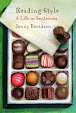
Right up to the structurally equivalent point in The Stranger’s Child (2011) – that is, over the course of four substantial novels and a good chunk of the fifth – fragmentation played little part in Hollinghurst’s fictional world. Discontinuity was what his style existed to banish or perhaps redeem. His achievement was to find a way of writing that could accommodate promiscuous sex, the experience of watching Scarface and the use of Ecstasy on the same plane as evocations of Whistler’s brushwork, Henry James’s prose or Frank Lloyd Wright’s way with a building. This was a sensibility that seemed not to recognise a separation between high and low, past and present, glory and disgrace.. Thursday is really my "weekend" - I need to make up ground and actually write my overdue essay on the footnote, but it is a very tempting idea just to spend the day reading Hollinghurst's latest and the new Philip Pullman installment....
Showing posts with label Alan Hollinghurst. Show all posts
Showing posts with label Alan Hollinghurst. Show all posts
Thursday, October 19, 2017
Cheap effects
At the LRB, Adam Mars-Jones on Alan Hollinghurst's latest novel and literary career more generally:


Sunday, August 05, 2012
Anomalies
Some interesting thoughts on style and anachronism in Alan Hollinghurst's review of Peter Carey's new novel at the NYRB:
In Henry Brandling’s narrative, unlike Olivier’s, Carey is claiming to present a historical document, a journal quite specifically written in 1854; here again a number of anachronisms may be mere fictional license, or reasonable guesses that for instance “potty” (meaning a bit mad) might have been idiomatic some time before its first recorded usage in 1920. But still, “you scared the pants off Hartmann,” an idiom first recorded in 1925, “ashtray” (1887), “guff” (US, 1888), “bumph” (1889, and then only as bumf, for bum-fodder), “programmer” and “programme” as a verb (1948 and 1945), are all more or less jarring. When Brandling uses terms like “celluloid” (a plastic invented in 1870) and “snookered” (when the game of snooker wasn’t named till 1889), you start to feel that Carey, a supreme virtuoso of language, who besides can look these things up as easily as I can, must be aiming at some deliberate alienation effect. To what end, though, it is rather hard to say.
Tuesday, July 03, 2012
Red light, green light
Just read what is probably my favorite novel of the year. It is incredibly good, and not yet published in the US unfortunately (it is going to be hard for me to put it evangelically into people's hands): Alan Warner's The Deadman's Pedal. Aside from the fact that it includes all sorts of elements I particularly like, the prose is unbeatably perfect, and with a very different set of political and cultural alignments than Alan Hollinghurst, whose books I love but who is coming at things from a point of view that is frequently off-putting to me.
In a curious way I was much reminded of Alan Garner, whose name is only different by one letter, the Garner of Red Shift rather than Weirdstone. Geology, place, history, above all language and the particular vocabularies associated with various forms of expert knowledge; I can't think of another book whose idiom quite so precisely and magically as this one captures a whole world with all of its dimensions. Stuart Kelly's review at the Guardian fortunately saves me the trouble of trying to write a better description here!
Not sure if the feel will translate in a short excerpt, but here are a few sentences I especially liked (they are unusual in the context of the novel as a whole, there is almost an aphoristic quality to the final sentence - not Warner's usual habit - which is why it stood out, though it is quite distinct from the Flaubert-Hollinghurst-St. Aubyn lineage of satirical summing-up):
In a curious way I was much reminded of Alan Garner, whose name is only different by one letter, the Garner of Red Shift rather than Weirdstone. Geology, place, history, above all language and the particular vocabularies associated with various forms of expert knowledge; I can't think of another book whose idiom quite so precisely and magically as this one captures a whole world with all of its dimensions. Stuart Kelly's review at the Guardian fortunately saves me the trouble of trying to write a better description here!
Not sure if the feel will translate in a short excerpt, but here are a few sentences I especially liked (they are unusual in the context of the novel as a whole, there is almost an aphoristic quality to the final sentence - not Warner's usual habit - which is why it stood out, though it is quite distinct from the Flaubert-Hollinghurst-St. Aubyn lineage of satirical summing-up):
The bike struggled with their combined weights on the hairpin corner at the top of the King's Way and he had to turn the handlebar gear down to second with the bright headlight of an impatient car behind them before he indicated left and pulled in.
This lay-by, so insignificant in their previous lives, had now become their place of meeting. The need was less furtive and romantic than that the engine on the new bike struggled to take them both up the longer and steeper hill within the Brae Estate -- as Simon had discovered on his birthday. Almost all Simon's comments on any future Nikki and he would share involved reference to a more powerful, anticipated motorbike.
Friday, October 21, 2011
Peek Freans redux
It was clear from the general drift of reviews by James Wood at the New Yorker and Daniel Mendelsohn at the New York Review of Books that readers were not finding Alan Hollinghurst's The Stranger's Child an achievement on the order of The Line of Beauty, which is high on my own personal shortlist of novels at the perfect intersection of critical interestingness and passionate reader-love; now that I've read the new novel, I wouldn't say that I agree with all of the specifics of either critic's anatomizing of the book's flaws and failures (Wood is much too harsh on the Jamesian echoes, Mendelson emphasizes The Swimming Pool Library too much at the expense of The Folding Star which I am convinced is Hollinghurst's other masterpiece and the book I must soonest reread, I also don't at all see that it would have been a good idea for Hollinghurst to produce more of 'Cecil Valance''s poetry a-la-Possession), but there's no doubt that it doesn't add up to something especially substantial, as lovely as the bits may be. I enjoyed it a good deal, though, and I may give it a reread in six months or so to see if it shakes out differently for me at that point.
(I was fascinated by the way that in the section titled 'Steady, boys, steady!' the protagonist of Line of Beauty has here been split into two different characters, Peter and Paul; it's something like what Austen does, sequentially, as she rewrites pairs of heroines from Sense and Sensibility to Pride and Prejudice to Mansfield Park.)
Phrases that struck and pleased me:
- of a teacher, doing something at 9.35, "with the recurrent momentary dread and resolve that come with living by a timetable";
- of the same character's playing four-hand piano music with an older female character who is a much better pianist than he is (I love four-hands piano music as it was something my mother played now and again in my childhood, very well, an appealing mini-canon of early twentieth-century stuff):
- of the callow young aspiring biographer, visiting an editor at the offices of the TLS as the "trolley stacked high with tightly bound bales of newsprint" arrives: "In a moment the plastic tape was snipped, and the top copy plucked up and turned and presented to Paul with a casual flourish: 'For you!' - the new TLS - Friday's TLS, ready two days early, 'hot off the press' someone said, enjoying his reactions, though in fact the paper was cool to the touch, even slightly damp" (and then the last sentences of the chapter, a few paragraphs later: "He kept his copy of the day-after-tomorrow's TLS under his arm, which he wanted very much to be seen with. He didn't think the people in the street here were getting the point of it - but back in the North Reading-Room of the British Library he felt it might stir a good deal of envy and conjecture" - the repetition of the letters TLS is almost like the barouche-landau in Emma)
And finally, because I have had a longstanding obsession with the Peek Freans 'fruit creme' biscuit, a childhood favorite that recently somewhat unfortunately reentered my current realm of preoccupation by way of the ruminations and biscuit-eating practices of Walter on Fringe (I almost bought exactly this box of biscuits in Ottawa a couple weeks ago, only it was not the moment - but I was certainly looking at them longingly! - the name itself is so mouth-alluring and peculiar to the eye, it's definitely part of the charm, though I am not underrating the appeal of the 'creme' and also the tug of the surprisingly chewy fruit jelly in the cookie that is the one I particularly like):
(I was fascinated by the way that in the section titled 'Steady, boys, steady!' the protagonist of Line of Beauty has here been split into two different characters, Peter and Paul; it's something like what Austen does, sequentially, as she rewrites pairs of heroines from Sense and Sensibility to Pride and Prejudice to Mansfield Park.)
Phrases that struck and pleased me:
- of a teacher, doing something at 9.35, "with the recurrent momentary dread and resolve that come with living by a timetable";
- of the same character's playing four-hand piano music with an older female character who is a much better pianist than he is (I love four-hands piano music as it was something my mother played now and again in my childhood, very well, an appealing mini-canon of early twentieth-century stuff):
There was an undeniable intimacy in the four-hand sessions with Corinna. Sharing her piano stool, he had a sense of the complete firmness of her person, her corseted side and hard bust, their hips rolling together as they reached and occasionally crossed on the keyboard. As the secondo player he did all the pedalling, but her legs sometimes jerked against his as if fighting the impulse to pedal herself. The contact was technical, of course, like that in sport, and not to be confused with other kinds of touching. None the less he felt she enjoyed it, she liked the businesslike rigour of its not being sexual as well as the unmentionable fraction by which it was.- the pastiche bit of Dudley Valance's autobiography that describes his mother's "book tests," spiritualist exercises in the library
- of the callow young aspiring biographer, visiting an editor at the offices of the TLS as the "trolley stacked high with tightly bound bales of newsprint" arrives: "In a moment the plastic tape was snipped, and the top copy plucked up and turned and presented to Paul with a casual flourish: 'For you!' - the new TLS - Friday's TLS, ready two days early, 'hot off the press' someone said, enjoying his reactions, though in fact the paper was cool to the touch, even slightly damp" (and then the last sentences of the chapter, a few paragraphs later: "He kept his copy of the day-after-tomorrow's TLS under his arm, which he wanted very much to be seen with. He didn't think the people in the street here were getting the point of it - but back in the North Reading-Room of the British Library he felt it might stir a good deal of envy and conjecture" - the repetition of the letters TLS is almost like the barouche-landau in Emma)
And finally, because I have had a longstanding obsession with the Peek Freans 'fruit creme' biscuit, a childhood favorite that recently somewhat unfortunately reentered my current realm of preoccupation by way of the ruminations and biscuit-eating practices of Walter on Fringe (I almost bought exactly this box of biscuits in Ottawa a couple weeks ago, only it was not the moment - but I was certainly looking at them longingly! - the name itself is so mouth-alluring and peculiar to the eye, it's definitely part of the charm, though I am not underrating the appeal of the 'creme' and also the tug of the surprisingly chewy fruit jelly in the cookie that is the one I particularly like):
Next morning Paul sat in his hotel room, going over his notes, with a coffee tray beside him: the pitted metal pot with the untouchable handle, the lipsticked cup, the bowl of white sugar in soft paper tubes which he emptied serially into the three strong cupfuls he took, getting quickly excited and overheated. On a plate with a doily were five biscuits, and though he'd only just had breakfast he ate them all, the types so familiar - the Bourbon, the sugared Nice, the rebarbative ginger-nut, popped in whole - that he was touched for a moment by a sense of the inseparable poverty and consistency of English life, as crystallized in the Peek Frean assortment box.Light reading around the edges: Nina Kiriki Hoffman's A Red Heart of Memories (a Jo Walton recommendation); Elizabeth Haynes's Into the Darkest Corner (very good, very scary) and Thomas Enger's Burned (also very good, I thought - showing slightly the signs of inexperience in the writing, but I will eagerly read subsequent installments in the series); and another crime novel I found somewhat silly, Colin Cotterill's Killed at the Whim of a Hat.
Sunday, October 09, 2011
Light reading catch-up
A very tiring but also very productive week in Ottawa: several pieces of important business seem to have been well and truly accomplished. Collapsed into bed when I got home this afternoon, slept for some hours, then did my reading for tomorrow (Roland Barthes's The Neutral, Pope's The Rape of the Lock and a very good essay by Claude Rawson on mock-heroic and 'Pope's Waste Land') but will have to write my comments on last week's graduate student writing assignments in the morning: digging deeper to get them done now seems impossible. However I think I've done enough tonight that I can carve out the time for the Beast boot camp tomorrow morning: it knocks out everything from 5:45 rising all the way through to 9 or so, with a quick interlude for breakfast post-class before I get back on my bike to ride uptown, so I wasn't sure it really was going to be feasible, but it is a priority as I missed two classes last week.
I had hardly any time to read while I was away (mostly only in airports): an advance copy of Terry Pratchett's latest Discworld novel, Snuff, got me to Canada, and James Lee Burke's Rain Gods whiled away a few nighttime hours during the week and got me most of the way home. My copy of Alan Hollinghurst's new novel, ordered from England via The Book Depository, finally arrived in Cayman in September, and B. brought it to give to me in Ottawa, but I haven't even had a chance to crack it open. Fairly busy this week till Tuesday late afternoon, and with one substantial chunk of reading (Adam Smith's Theory of Moral Sentiments!) to do for Wednesday afternoon also, but the week opens up as of Tuesday evening and I am very much hoping I will be able to lounge, recumbent, and devour it - I am feeling much in need of restoration and recovery!
I had hardly any time to read while I was away (mostly only in airports): an advance copy of Terry Pratchett's latest Discworld novel, Snuff, got me to Canada, and James Lee Burke's Rain Gods whiled away a few nighttime hours during the week and got me most of the way home. My copy of Alan Hollinghurst's new novel, ordered from England via The Book Depository, finally arrived in Cayman in September, and B. brought it to give to me in Ottawa, but I haven't even had a chance to crack it open. Fairly busy this week till Tuesday late afternoon, and with one substantial chunk of reading (Adam Smith's Theory of Moral Sentiments!) to do for Wednesday afternoon also, but the week opens up as of Tuesday evening and I am very much hoping I will be able to lounge, recumbent, and devour it - I am feeling much in need of restoration and recovery!
Friday, June 24, 2011
Firbankiana and mash
Alan Hollinghurst is not a forthcoming interviewee (FT site registration required), but I am extremely eager to read his new novel....
Thursday, April 01, 2010
Character analysis
On my list of undisputably great novels of the last decade (the last century!): Alan Hollinghurst's The Line of Beauty. Really it must be read to be believed, but here is an early passage I like quite a bit:
Leo was certainly quite an egotist — Catherine’s graphological analysis had been spot on. But he didn’t expound his inner feelings. He did something Nick couldn’t imagine doing himself, which was to make statements about the sort of person he was. “I’m the sort of guy who needs a lot of sex,” he said, and, “I’m like that, I always say what I think.” Nick wondered for a moment if he’d inadvertently contradicted him. “I don’t bear grudges,” Leo said sternly: “I’m not that kind of person.” “I’m sure you’re not,” Nick said, with a quick discountenancing shudder. And perhaps this was a useful skill, or tactic, in the blind-date world, even if Nick’s modesty and natural fastidiousness kept him from replying in the same style (“I’m the sort of guy who likes Pope more than Wordsworth,” “I’m crazy about sex but I haven’t had it yet”).
Monday, December 07, 2009
"Aesthetic promptings and hesitations"
From Alan Hollinghurst, The Line of Beauty:
He was wearing the same old jeans of their first date, which for Nick now had a touching anecdotal quality, he knew them and loved them; and a zipped-up tracksuit top which made him look ready for action, or for inaction, the rigours and hanging about of training.
Wednesday, November 04, 2009
Selection and juxtaposition
I linked to this piece some years ago, but it bears repeating, I think; at the TLS, Alan Hollinghurst on the novels of Ronald Firbank:
where Proust, at just the same time, was expanding the novel to unprecedented length to do justice to his narrator’s complex world and his complex consciousness of it, Firbank had arrived at an aesthetic which required almost everything to be omitted. Where Proust, a fellow observer of upper-class society and sexual ambivalence, worked by the endlessly exploratory and comprehensive sentence, the immense paragraph, the ceaselessly dilated book, Firbank laboured to reduce – not merely to condense but to design by elimination. “I am all design – once I get going”, he wrote. “I think nothing of filing fifty pages down to make a brief, crisp paragraph, or even a row of dots.” He constructed in fragments, juxtaposed without any cushioning or explanatory narrative tissue. Both Proust and Firbank loved describing parties, but where Proust’s parties are occasions for infinitely fine analysis and profound digression, Firbank’s are an abstract mosaic of impressions, in which human intercourse is enacted as a kind of coruscating nonsense. One of his most striking inventions was the depiction of a party as a montage of unrelated fragments, picked up as if by a roving microphone: “Her dull white face seems to have no connection with her chestnut hair!” “ . . . with him to Palestine last spring. Oh, dear me, I thought I should have died in Joppa!” “You mix them with olives and a drop of cognac.” [. . . .] “The only genuine one was Jane.” “. . . poison.” “. . . fuss . . . .” “My husband was always shy. He is shy of everybody. He even runs away from me!”.
[...]
Firbank worked in fragments all the way through, amassing phrases in notebooks, and supposedly compiling his early novels on narrow horizontal strips of paper, which could be shuffled and rearranged in a way that sounds prophetic of much later experiments with the cut-up. Everything depended on the instinct for selection and juxtaposition. The Jamesian challenge of “free selection – which is the beautiful, terrible whole of art” has not been abandoned, but the terms that govern that selection have been radically revised. There is a paradoxical feeling, especially in his earlier and more experimental novels, that almost everything on the page is irrelevant and yet that nothing could be omitted. The exclamatory inconsequence of social conversation is deployed as a kind of screen, through which the attentive reader will discern hinted patterns, the intermittent unfolding of an anecdote or a joke. As a means of depicting social life in which any contact is transient and any shared understanding unlikely, the technique is wittily appropriate. Had James read Vainglory, when it came out on his seventy-second birthday, he would have found it to infringe almost every canon of Jamesian law – no centre of consciousness, no unity of effect, no “action” – though he might have hesitated to call it loose and baggy when it was so agile, so indirect, so evidently if so mysteriously “designed”.
Subscribe to:
Posts (Atom)