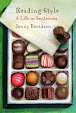
The scientist asks how I can call my writing vocation and not addiction. I no longer see why I should have to make that distinction. I am addicted to breathing in the same way. I write because when I don't, it is suffocating. I write because something much larger than myself comes into me that suffuses the page, the world, with meaning. Although I constantly fear that what I am writing teeters at the edge of being false, this force that drives me cannot be anything but real, or nothing will ever be real for me again.
Showing posts with label vocations. Show all posts
Showing posts with label vocations. Show all posts
Tuesday, March 01, 2016
Vocational
Just reread a book that made a great impression on me when I first read it ten years ago, Alice Flaherty's The Midnight Disease: The Drive to Write, Writer's Block, and the Creative Brain. Still very struck by these final lines:


Sunday, April 27, 2014
Straining your ears for the response
Tim Adams interviews Hilary Mantel for the Observer Review:
I always write in terms of scenes, and for a big scene in one of the Cromwell novels I will prepare for several days by going through all my notes and all my sources before diving into the writing. At that moment where I commit to the writing it is exactly like walking on stage. All your senses are alive and it is as if you are straining your ears for the sound of a response.Another bit caught my attention too, in response to a question about the huge success of these books: "I never expected it but it gives me great pleasure though, because I saw it as a continuation of what I had been doing. Right from the first page, the first paragraph, it was like: "Ah! Now you see everything you have done was aiming at this!" I think this project is the thing I could have done that nobody else could have done, if that doesn't sound boastful." I am overdue a post about writing, only I am (a) waiting till frenzy of school year is over and (b) full of trepidation about airing thoughts and plans, as there does tend to be a dynamic in which one speaks about a future project and then loses interest in actually executing it! Definitely some thoughts on writing soon, though - I have been writing very little this year (other than tens of thousands of words of these reports for the tenure review advisory committee!), and it has actually been very helpful in terms of letting the desire and the ideas well up in me and want to burst out in a sustained stint of effort over the summer.
Saturday, February 12, 2011
"Women, Willie. Women"
Two good things in the weekend's Times from Toni Schlesinger, author of the superlative Five Flights Up: thoughts on cruising the Caribbean aboard a behemoth and an interview with a much-loved Norwegian cruise-ship captain.
Also: I have rather a yen for a cube of this ilk!
Also: I have rather a yen for a cube of this ilk!
Friday, May 21, 2010
A long musing on light reading
As longtime readers of this blog may remember, it was a seminal experience of my life when my mother let me take the day off school to go to a Dick Francis book-signing. I am not a great attender of signings in general (I do not altogether dissent from Brent's observation as to how odd it is that people should value a scribbled-in book more than a pristine copy of the same book!), but when I received an invitation last week from Lee Child's web maven Maggie Griffin to come to the book launch at Barnes and Noble near Lincoln Center on Tuesday night and join the party for dinner and a beer (it turned out to be Dom Perignon, though!) afterwards, I really could not resist.
In fact after my last ruminations on the topic I did pre-order 61 Hours; the doorman in my building handed the box to me on Monday night around ten as I came in feeling very fatigued, and so it was an absolute gift to be able to flop down on the couch and devour it.
It is difficult for me to imagine a book I'd rather be reading than the brand new Jack Reacher novel (well, a new novel by Peter Temple would be at the very top of the list, and I was certainly unable to keep my hands off that Diana Wynne Jones book the other week) - there is a short list of writers whose books are especially dear to my heart, let's say, and Lee Child is certainly one of them. It is a delightful book! You know you have come home when Reacher picks up the book's first cup of coffee ("The coffee was an hour old, and it had suffered in terms of taste but gained in terms of strength"); it is a priceless mixture of familiarity and surprise.
One of the things I've always liked about this series is the way it plays around with the variations possible on a set of constraints - the constraints are tight, but it is actually very unusual to see (as one does with this series) the author switching between first- and third-person narration in different books, or successfully integrating the "prequel" mode (and I was happy to learn that there will almost certainly be a "prequel sequel").
By far the most striking thing about the book event itself is that it is perfectly calibrated to audiences. I've been thinking a lot recently about book publicity, more in its online incarnations than concerning the in-person version, but I feel that any author about to undertake a bout of publicity should go and see one of this handful of authors who really know how to pitch and work the crowd. Lee Child is one of the best I've ever seen at this (his writing is nothing like Neil Gaiman's, and they make very different choices about what sorts of project to prioritize, but I think of them as the two clear undoubted masters of the new world in which authors reach readers through the internet and through a sort of personal charisma that can be scaled up very effectively at quite large book events) - his manner and his verbal intelligence are also very well-suited to this sort of event, but it's the format he used that really struck me.
He said that he would offer up six facts about the novel and then turn things over to the audience for questions, and proceeded to do just that - an economical and appealing solution to the problem of what to do at a so-called 'reading' (I did actually 'read' when my first novel came out, but in retrospect it is a mistake, Q&A or some other play-within-constraint-type structure is really the way to go). The repertoire of questions that will be asked is obviously finite, so the answers to those are appealingly sharp, economical and funny; all in all, most interesting and edifying.
(I also note that the questions were much more coherent than the ones I hear at academic talks that are open to the public - abstraction is less likely to lead to readerly clarity than vivid concrete action!)
(Random fact, not one of the initial six: this novel was written in 79 working days - I think I am recalling the number correctly - but the Child doctrine is that unfortunately even if one works on every available day, days like Christmas will necessarily intervene, so that work time must be preciously guarded. There is no substantive rewriting or revising, only polishing; he says that he can tell as early as two or three words into a sentence that things are going wrong, and backtracks rather than going through the inefficient process of writing and then revising/cutting! I am a draft-writer myself, but the sense of the time-frame required to produce an initial draft fits with my sense from Invisible Things, though that then underwent 2 significant further revisions - but then that is what happens if the book is composed over eight months that also include a semester and a half of teaching. There were lots of funny moments/good laughs, but one of the ones I privately most enjoyed was the shudder - I think it is a mixture of awe and shock! - that greeted the revelation that a typical Childean working day begins when he gets up at 11!)
I got my copy inscribed for my nephew Jack (it is my understanding that Reacher is at least in part his namesake!), the youngest person in this picture. I also set to thinking hard about what I can do to get this next novel of mine out there, but even more about what sort of choices I need to make about the books I am writing.
The style book (which should go out shortly to publishers) and the ABCs of the novel book that I'll be working on this year are not novels, but neither are they academic books. I hope that they will both be interesting and intelligent books of interest to anyone who likes to think about how sentences and paragraphs and novels as a whole work. My life would be easier if I just stopped writing novels - but I have been writing a novel, one way or another, since I was about nine years old, and I think it may be a necessary part of my life!
What kind of novels to write, though? That's the tricky thing. I am temperamentally a "try everything once" person rather than a "find a good thing and stick to it." This comes with advantages, but also some significant downsides. With novel-writing in particular it is by far easier to find readers if you start doing a good thing and then keep on doing it.
If I could just choose, I would definitely be writing crime fiction of some sort; it's the genre I've been reading in most faithfully and most extensively for many years. I have absolutely no yen to be a 'literary' novelist and have to play the associated games, it is not appealing to me (if I were writing that sort of book, I would gravitate to the experimental small-press world rather than the higher-prestige end of it, because then you really and truly are pleasing yourself in your writing). I have been and always will be an enthusiastic reader of young-adult fantasy, and to a lesser extent non-fantastical young adult fiction more generally and non-young-adult fantastical fiction - but I don't think it's a good fit for me commercially, when it comes down to it.
The crime fiction community is smart and adult and welcoming, and so many good books are being written (Lee Child was mentioning his peer group - i.e. they were the new kids around the same tie - being Michael Connelly, Robert Crais, Dennis Lehane, Laura Lippman - the list speaks for itself); I guess my readerly identity is pretty strongly in crime fiction; and yet, as I have said several times recently, I just don't think I can write good crime novels!
I'm not a minimalist, I can't keep out the copious and wayward other stuff that creeps in, I don't know any criminals or any homicide detectives or any men or women of action, I don't truly have the journalist's skill set/set of interests (you see this differently in Lippman and in Peter Temple, or Sara Paretsky, but it is part of what makes much crime fiction so appealing).
I don't have the puzzle/game-like feel that makes Lee Child's books so successful or that Dick Francis worked so well in his best books. I am too lazy to look up the link, but Francis said in an interview that when he was about to start writing Enquiry, he cast about for what would be the very worst thing that could happen to a jockey, and it seemed to him that it would be losing his license - and you can see that the first sentence of the book is indeed "Yesterday I lost my license." There is an elegance and forcefulness to this sort of approach that I admire immensely but that is not at all congruent with my own temperamental and story-telling strengths!.
I do think that I could write some kind of thriller. Stieg Larsson's books are interesting to me partly because they strike me - I am not saying I could have international success, just that the mode is better suited to my strengths! - as much more the kind of thing I could write. They're a bit baggier and more rambling, they're set in a milieu of journalism and computer hacking and corporate private investigation that is much more what I could successfully research and bring to life, they are stuffed with research and integrate history as well as the present and altogether just give me (more than many other works of my favorite light reading do) the sense that I could pull off something like that.
I was thinking recently, after reading Dorothy Dunnett, that I should try my hand at full-on historical fiction, as it would play so much more to my strengths (I love doing research, I am knowledgeable about the past), but my ardor has slightly cooled for that idea, partly because of how much I enjoyed Tomalin's Pepys biography. Like, might as well write a true book if you are going to delve so deeply into the 1660s....
Anyway, that is quite enough rambling for now. I guess I grudgingly have to admit that yes, I will write more novels, and no, I am still not sure what sort of novel they will be; I am a slow learner in this respect, I have not yet discovered my vocation as a fiction-writer! But I do think that whatever it is, I should partly let my blog tell me; it is the steadiest and most continuous record of my day-to-day thoughts and interests that I have. Might spend some time later this summer looking back through the archive - perhaps it will tell me that I should be writing a high-concept series of thrillers with journalists, scenes set in research labs, Big Pharma scandal and genetic engineering - this is more the sort of thing I feel I can write about convincingly than people beating each other up in a bar!
(I mean, I could have one or two bar fights, but it would be a very poor use of my resources to write a book that was mainly set in that sort of milieu...)
In fact after my last ruminations on the topic I did pre-order 61 Hours; the doorman in my building handed the box to me on Monday night around ten as I came in feeling very fatigued, and so it was an absolute gift to be able to flop down on the couch and devour it.
It is difficult for me to imagine a book I'd rather be reading than the brand new Jack Reacher novel (well, a new novel by Peter Temple would be at the very top of the list, and I was certainly unable to keep my hands off that Diana Wynne Jones book the other week) - there is a short list of writers whose books are especially dear to my heart, let's say, and Lee Child is certainly one of them. It is a delightful book! You know you have come home when Reacher picks up the book's first cup of coffee ("The coffee was an hour old, and it had suffered in terms of taste but gained in terms of strength"); it is a priceless mixture of familiarity and surprise.
One of the things I've always liked about this series is the way it plays around with the variations possible on a set of constraints - the constraints are tight, but it is actually very unusual to see (as one does with this series) the author switching between first- and third-person narration in different books, or successfully integrating the "prequel" mode (and I was happy to learn that there will almost certainly be a "prequel sequel").
By far the most striking thing about the book event itself is that it is perfectly calibrated to audiences. I've been thinking a lot recently about book publicity, more in its online incarnations than concerning the in-person version, but I feel that any author about to undertake a bout of publicity should go and see one of this handful of authors who really know how to pitch and work the crowd. Lee Child is one of the best I've ever seen at this (his writing is nothing like Neil Gaiman's, and they make very different choices about what sorts of project to prioritize, but I think of them as the two clear undoubted masters of the new world in which authors reach readers through the internet and through a sort of personal charisma that can be scaled up very effectively at quite large book events) - his manner and his verbal intelligence are also very well-suited to this sort of event, but it's the format he used that really struck me.
He said that he would offer up six facts about the novel and then turn things over to the audience for questions, and proceeded to do just that - an economical and appealing solution to the problem of what to do at a so-called 'reading' (I did actually 'read' when my first novel came out, but in retrospect it is a mistake, Q&A or some other play-within-constraint-type structure is really the way to go). The repertoire of questions that will be asked is obviously finite, so the answers to those are appealingly sharp, economical and funny; all in all, most interesting and edifying.
(I also note that the questions were much more coherent than the ones I hear at academic talks that are open to the public - abstraction is less likely to lead to readerly clarity than vivid concrete action!)
(Random fact, not one of the initial six: this novel was written in 79 working days - I think I am recalling the number correctly - but the Child doctrine is that unfortunately even if one works on every available day, days like Christmas will necessarily intervene, so that work time must be preciously guarded. There is no substantive rewriting or revising, only polishing; he says that he can tell as early as two or three words into a sentence that things are going wrong, and backtracks rather than going through the inefficient process of writing and then revising/cutting! I am a draft-writer myself, but the sense of the time-frame required to produce an initial draft fits with my sense from Invisible Things, though that then underwent 2 significant further revisions - but then that is what happens if the book is composed over eight months that also include a semester and a half of teaching. There were lots of funny moments/good laughs, but one of the ones I privately most enjoyed was the shudder - I think it is a mixture of awe and shock! - that greeted the revelation that a typical Childean working day begins when he gets up at 11!)
I got my copy inscribed for my nephew Jack (it is my understanding that Reacher is at least in part his namesake!), the youngest person in this picture. I also set to thinking hard about what I can do to get this next novel of mine out there, but even more about what sort of choices I need to make about the books I am writing.
The style book (which should go out shortly to publishers) and the ABCs of the novel book that I'll be working on this year are not novels, but neither are they academic books. I hope that they will both be interesting and intelligent books of interest to anyone who likes to think about how sentences and paragraphs and novels as a whole work. My life would be easier if I just stopped writing novels - but I have been writing a novel, one way or another, since I was about nine years old, and I think it may be a necessary part of my life!
What kind of novels to write, though? That's the tricky thing. I am temperamentally a "try everything once" person rather than a "find a good thing and stick to it." This comes with advantages, but also some significant downsides. With novel-writing in particular it is by far easier to find readers if you start doing a good thing and then keep on doing it.
If I could just choose, I would definitely be writing crime fiction of some sort; it's the genre I've been reading in most faithfully and most extensively for many years. I have absolutely no yen to be a 'literary' novelist and have to play the associated games, it is not appealing to me (if I were writing that sort of book, I would gravitate to the experimental small-press world rather than the higher-prestige end of it, because then you really and truly are pleasing yourself in your writing). I have been and always will be an enthusiastic reader of young-adult fantasy, and to a lesser extent non-fantastical young adult fiction more generally and non-young-adult fantastical fiction - but I don't think it's a good fit for me commercially, when it comes down to it.
The crime fiction community is smart and adult and welcoming, and so many good books are being written (Lee Child was mentioning his peer group - i.e. they were the new kids around the same tie - being Michael Connelly, Robert Crais, Dennis Lehane, Laura Lippman - the list speaks for itself); I guess my readerly identity is pretty strongly in crime fiction; and yet, as I have said several times recently, I just don't think I can write good crime novels!
I'm not a minimalist, I can't keep out the copious and wayward other stuff that creeps in, I don't know any criminals or any homicide detectives or any men or women of action, I don't truly have the journalist's skill set/set of interests (you see this differently in Lippman and in Peter Temple, or Sara Paretsky, but it is part of what makes much crime fiction so appealing).
I don't have the puzzle/game-like feel that makes Lee Child's books so successful or that Dick Francis worked so well in his best books. I am too lazy to look up the link, but Francis said in an interview that when he was about to start writing Enquiry, he cast about for what would be the very worst thing that could happen to a jockey, and it seemed to him that it would be losing his license - and you can see that the first sentence of the book is indeed "Yesterday I lost my license." There is an elegance and forcefulness to this sort of approach that I admire immensely but that is not at all congruent with my own temperamental and story-telling strengths!.
I do think that I could write some kind of thriller. Stieg Larsson's books are interesting to me partly because they strike me - I am not saying I could have international success, just that the mode is better suited to my strengths! - as much more the kind of thing I could write. They're a bit baggier and more rambling, they're set in a milieu of journalism and computer hacking and corporate private investigation that is much more what I could successfully research and bring to life, they are stuffed with research and integrate history as well as the present and altogether just give me (more than many other works of my favorite light reading do) the sense that I could pull off something like that.
I was thinking recently, after reading Dorothy Dunnett, that I should try my hand at full-on historical fiction, as it would play so much more to my strengths (I love doing research, I am knowledgeable about the past), but my ardor has slightly cooled for that idea, partly because of how much I enjoyed Tomalin's Pepys biography. Like, might as well write a true book if you are going to delve so deeply into the 1660s....
Anyway, that is quite enough rambling for now. I guess I grudgingly have to admit that yes, I will write more novels, and no, I am still not sure what sort of novel they will be; I am a slow learner in this respect, I have not yet discovered my vocation as a fiction-writer! But I do think that whatever it is, I should partly let my blog tell me; it is the steadiest and most continuous record of my day-to-day thoughts and interests that I have. Might spend some time later this summer looking back through the archive - perhaps it will tell me that I should be writing a high-concept series of thrillers with journalists, scenes set in research labs, Big Pharma scandal and genetic engineering - this is more the sort of thing I feel I can write about convincingly than people beating each other up in a bar!
(I mean, I could have one or two bar fights, but it would be a very poor use of my resources to write a book that was mainly set in that sort of milieu...)
Thursday, March 11, 2010
Sweat, dust, romance
At TNR, a stirring review by Anthony Grafton of Louis Menand's new book on the American university. Here's the bit I especially liked:
Menand describes the university in generalities. Many of them strike one as true, but some of them seem to reflect a much narrower experience even than he has had, and imply a surprisingly reductionist perspective. Early on he notes that, once upon a time, being a professor meant having a vast fund of esoteric knowledge that the ordinary person could not match--but now, Menand smugly observes, “most of that esoterica is available instantly on Wikipedia.” What?! If the esoterica in question have to do with Britain and America in the nineteenth and twentieth centuries (and even there I have my doubts), maybe. But how many humanities professors and students are prepared to make do with Wikipedia’s “esoterica”? They interpret Chinese classics that have to be pieced together from bamboo strips, or they reconstruct Greek texts from fragments preserved in garbage dumps and mummy wrappings, or they record and interpret religious ceremonies in India and Nepal. You cannot do those jobs without esoteric knowledge. You cannot Wiki them.(Link courtesy of Rohan Amanda Maitzen; an excerpt of Menand's book appeared last year in Harvard Magazine.)
Such slips are not minor. They are not even slips. They reveal an error of principle. Menand’s statement that graduate students do not need specialized knowledge is an astonishing and terrible concession: taken literally, it defines the humanities as a realm of simple problems simply solved. No sweat, no dust, no romance, no struggle. But the great humanists are furious, passionate giants who heave one mountain onto another as they stage their attacks on Olympus. At its Faustian and demonic peaks, the tradition of modern humanism includes Benjamin on the Paris arcades and Scholem on the Kabbalah, Fraenkel on Greek and Latin literature and Weinreich on the Yiddish language, Neugebauer on ancient science and Kantorowicz on law and political symbols and Klemperer on the language of the Third Reich, Wittgenstein and Curtius, Kristeller and Panofsky, Syme and Momigliano, Arendt and Colie. Merely to mention these names is to see the inadequacy of Menand’s analysis.
Most of us, and most of our students, are in no danger of performing at that august level. But when we enter on our studies, we take unto ourselves these and other masters, and we sprinkle ourselves with their dust. Anyone who has watched humanists work over the last generation or two has seen new masters take the places of the ones who came before them, and has marveled as they restored new ideas, voices, songs, and images to our records and our canons. We still climb the mountain, or at least we try.
Friday, November 06, 2009
"The habits and the aura of a student"
At the Rumpus, Jeremy Hatch provides wonderful excerpts from Sigrid Nunez's memoir about Susan Sontag. Nunez's thoughts on Sontag's contempt for teaching strike me as very perceptive (I come at it, of course, from quite a different point of view!).
(NB I was teaching Sontag's "Notes on Camp" in class this week, together with the demented style miscellany - it is truly a bravura performance...)
(Further thought: I was party to a recent discussion about Kenneth Koch that included the suggestion that he must have been one of the most influential teachers of his generation, not least though also not exclusively in terms of significant writers thinking of themselves as his students after having officially or unofficially studied with him at Columbia - it gave me cause to think about how influence passes strongly through contact inside and outside the classroom as well as through published books - I think that I have sometimes undervalued teaching as opposed to writing, but that the two are in a best-case scenario truly complementary. Of course, student-teacher relationships at Columbia or otherwise are often complex! The letter in which Trilling expresses his dislike for his former student Ginsberg's Howl was described to us very vividly last week [we were having a session for the seminar I'm teaching this semester on Richardson's Clarissa] by the Curator for Literature at the Rare Books and Manuscripts Library at Columbia, which is what caused me to look for that piece just now....)
(NB I was teaching Sontag's "Notes on Camp" in class this week, together with the demented style miscellany - it is truly a bravura performance...)
(Further thought: I was party to a recent discussion about Kenneth Koch that included the suggestion that he must have been one of the most influential teachers of his generation, not least though also not exclusively in terms of significant writers thinking of themselves as his students after having officially or unofficially studied with him at Columbia - it gave me cause to think about how influence passes strongly through contact inside and outside the classroom as well as through published books - I think that I have sometimes undervalued teaching as opposed to writing, but that the two are in a best-case scenario truly complementary. Of course, student-teacher relationships at Columbia or otherwise are often complex! The letter in which Trilling expresses his dislike for his former student Ginsberg's Howl was described to us very vividly last week [we were having a session for the seminar I'm teaching this semester on Richardson's Clarissa] by the Curator for Literature at the Rare Books and Manuscripts Library at Columbia, which is what caused me to look for that piece just now....)
Monday, April 13, 2009
Powers of Sontag
At TNR, Daniel Mendelsohn has a thoughtful and thought-provoking essay about Susan Sontag. (Link courtesy of The Elegant Variation.)
Mendelsohn makes the case that Sontag misunderstood her own strengths (as critic versus novelist) and affiliations (with the eighteenth century rather than the nineteenth):
Mendelsohn makes the case that Sontag misunderstood her own strengths (as critic versus novelist) and affiliations (with the eighteenth century rather than the nineteenth):
This journal reveals a person for whom, however much she saw herself as a sensualist, the cognitive and the analytical invariably dominated the erotic and the affective. ("Emotionally, I wanted to stay," Sontag wrote of her decision to leave home and family in Los Angeles for Berkeley. "Intellectually, I wanted to leave." She left.) The inevitable triumph of the head over the heart in these pages defies, I think, a description of his mother that Rieff gives in his preface. In speaking of Sontag's extraordinary literary ambition, he compares her to Balzac's Lucien de Rubempre, the hero of Lost Illusions, the talented youth who comes from the provinces to find literary fame in Paris: a comparison that concludes with his summary explanation of Sontag as a "nineteenth-century consciousness." It is a judgment, you suspect, with which Sontag, with her insatiable avidity for experience and her penchant for the Continental novel as model of the highest form of literary activity, would have concurred.
And yet when you survey her career with an eye as coolly dispassionate as the one she trained on so many objects, it becomes obvious that, temperamentally, she belonged to another century entirely. Her failure to understand just which century it was accounts for the sense you often get, taking the work as a whole, of aspirations that were at odds with her temperament and her talent; and it explains a great deal about both the strengths and the weaknesses of her work, and also the strange fascination that she exerted.
Subscribe to:
Posts (Atom)