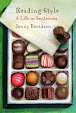
There is a slightly pretentious term in wine tasting and wine writing called ‘mouthfeel’. (It is also slightly baffling: where else might you feel wine if not in your mouth? On your foot?) The Oxford Companion to Wine calls it a ‘non-specific tasting term, used particularly for red wines, to indicate those textural attributes, such as smoothness, that produce tactile sensations on the surface of the oral cavity’. There is similar mouthfeel about translation. Its general development over the last century and more has been away from smoothness and towards authenticity, away from a reorganising interpretativeness which aims for the flow of English prose, towards a close-reading fidelity – enjoy those tannins! – which seeks to echo the original language.
Thursday, November 11, 2010
A strange business
At the LRB, Julian Barnes on Lydia Davis's Flaubert:


Stuff
An interview with me at Creative Writing Now about research and world-building in alternate history.
(I am laid low with a bad chest cold that is making me extremely glum...)
(I am laid low with a bad chest cold that is making me extremely glum...)
Wednesday, November 10, 2010
Sunday, November 07, 2010
Saturday, November 06, 2010
Saturday link miscellany
What's wrong with No. 10 (the underlying link is highly worthwhile!).
Neil Gaiman on seeing the Dresden Dolls.
Laura Amy Schlitz remembers Eva Ibbotson (link courtesy of Dave Lull).
Neil Gaiman on seeing the Dresden Dolls.
Laura Amy Schlitz remembers Eva Ibbotson (link courtesy of Dave Lull).
Friday, November 05, 2010
Thursday, November 04, 2010
"Trey-eight revolve 'em"
An absolutely fascinating piece by Paul Devlin at Slate on transcription errors in a new anthology of rap. It could usefully be read by people editing Shakespeare plays...
Three weeks
until the official publication of Invisible Things.
Here's an early review (the discussion in the comments thread makes me laugh and shake my head - authors have no control over covers!), and I'll post links as other stuff comes up, including entries in the forthcoming Traveling to Teens blog tour.
I won't be blogging regularly at the site I used for The Explosionist, as it seems to me to make more sense to consolidate my efforts here, but I'll probably use the sidebar there to keep track of interviews and online reviews. I've also just posted the author's note over there, as it wasn't included in the ARCs that went out this summer.
(I am pleased to know that US residents can pre-order a Kindle edition!)
Here's an early review (the discussion in the comments thread makes me laugh and shake my head - authors have no control over covers!), and I'll post links as other stuff comes up, including entries in the forthcoming Traveling to Teens blog tour.
I won't be blogging regularly at the site I used for The Explosionist, as it seems to me to make more sense to consolidate my efforts here, but I'll probably use the sidebar there to keep track of interviews and online reviews. I've also just posted the author's note over there, as it wasn't included in the ARCs that went out this summer.
(I am pleased to know that US residents can pre-order a Kindle edition!)
Wednesday, November 03, 2010
Light reading catch-up (Kindle edition)
The device itself continues to suit me extremely well, with the caveat that it is surprising and frustrating how many books aren't available for Kindle. Still plenty to read, I guess: but I will be glad when rights stop being sold in specific territories and electronic editions can be sold internationally....
Connie Willis's All Clear started off as a bit of a disappointment. I liked the first installment immensely, but I was unpersuaded by the first half of All Clear that this really needed to be a separate novel: the scenes of anxiety about London bombings, shelters, finding one's friends, etc. are compelling individually but when repeated cumulatively have more the feeling of an actual bad dream than of a novel; there is too little narrative shaping for my taste. The last third or so of the book is superb, though, and the conclusion is hugely emotionally gratifying, in a way that perhaps partly depends on the nightmarish aspect of the first part of the book; I just wonder whether there would have been some way to cut/edit the full manuscript so that it would have been a single long novel in one volume and without the relative longueurs of the first part of the second installment.
Arnaldur Indridason's Hypothermia is absolutely excellent, pretty much the pinnacle of what this sort of fiction ought to be: I really, really enjoyed it.
Sara Paretsky's Body Work felt a bit formulaic; she has perhaps written this book too many times before, and yet it is still a highly readable book...
Michael Connelly, The Reversal. I approached it without huge enthusiasm, it was more just something that was available that seemed sensible to load onto the device as a precaution, but I found it very good; I'm hoping that there may be a further installment of the tale, it seems to leave off with the opening for a sequel. I like it when authors of longtime series mix things up a bit; the alternating points of view work very well here, I think, and you always feel with Connelly that you are in the hands of a professional, in the best possible way.
Ake Edwardsson, The Shadow Woman (the 2010 publication date on this one misled me - I hadn't read it before, but it falls quite early in the series, giving an annoying backwards feeling to the series-driven reader): not bad, but not nearly up to the Indridason standard.
Ken Bruen, The Sanctuary: A Novel. Jack Taylor discovers Xanax! Seriously, though, Ken Bruen is a huge favorite of mine, and this is an extremely compelling installment in what is probably his most mainstream-mystery-type series. Very good writing indeed - makes my mouth water with envy, I wish I could write books like this....
Connie Willis's All Clear started off as a bit of a disappointment. I liked the first installment immensely, but I was unpersuaded by the first half of All Clear that this really needed to be a separate novel: the scenes of anxiety about London bombings, shelters, finding one's friends, etc. are compelling individually but when repeated cumulatively have more the feeling of an actual bad dream than of a novel; there is too little narrative shaping for my taste. The last third or so of the book is superb, though, and the conclusion is hugely emotionally gratifying, in a way that perhaps partly depends on the nightmarish aspect of the first part of the book; I just wonder whether there would have been some way to cut/edit the full manuscript so that it would have been a single long novel in one volume and without the relative longueurs of the first part of the second installment.
Arnaldur Indridason's Hypothermia is absolutely excellent, pretty much the pinnacle of what this sort of fiction ought to be: I really, really enjoyed it.
Sara Paretsky's Body Work felt a bit formulaic; she has perhaps written this book too many times before, and yet it is still a highly readable book...
Michael Connelly, The Reversal. I approached it without huge enthusiasm, it was more just something that was available that seemed sensible to load onto the device as a precaution, but I found it very good; I'm hoping that there may be a further installment of the tale, it seems to leave off with the opening for a sequel. I like it when authors of longtime series mix things up a bit; the alternating points of view work very well here, I think, and you always feel with Connelly that you are in the hands of a professional, in the best possible way.
Ake Edwardsson, The Shadow Woman (the 2010 publication date on this one misled me - I hadn't read it before, but it falls quite early in the series, giving an annoying backwards feeling to the series-driven reader): not bad, but not nearly up to the Indridason standard.
Ken Bruen, The Sanctuary: A Novel. Jack Taylor discovers Xanax! Seriously, though, Ken Bruen is a huge favorite of mine, and this is an extremely compelling installment in what is probably his most mainstream-mystery-type series. Very good writing indeed - makes my mouth water with envy, I wish I could write books like this....
Sunday, October 31, 2010
Herrings galore
Oliver Sacks is working on his backstroke. (Hat tip: Dave Lull.)
My favorite bit of the exchange:
My favorite bit of the exchange:
[Pop Matters:] Time travel: where, when, and why?
[OS:] I would go back 300 million years or so, for I have always longed to see the earth in its Carboniferous age, long before mammals evolved, or even flowering plants. The planet was the domain of gymnosperms, non-flowering plants, then. There were ferns and tree ferns, and giant Calamites—segmented relatives of today’s horsetails, ten- or 20-meters high. There were huge Lepidodendron, a meter and a half in diameter, related to today’s tiny club mosses. And there were cycads, very similar to those that survive today.
Saturday, October 30, 2010
Natterer's, pipistrelles
At the FT, Christopher Somerville on the bats of Petworth (site registration required).
Friday, October 29, 2010
Subscribe to:
Posts (Atom)