Thursday, March 06, 2014
YMCA
My old friend Farai Chideya writes an evocative piece for the Washington Post about being black at Harvard in the late 1980s. This is the Harvard I remember - I especially remember the Drag Night performance in which Farai and roommates, as the Village People, disconcerted MCs who had imagined they were only going to need awards for solo performers (with strong bias towards M-to-F!).


Ideology paves the way
Quote for the day, a bit of Gramsci I'm teaching alongside Johnson's plan for and preface to the Dictionary in seminar this afternoon:
The bayonets of Napoleon's armies found their road already smoothed by an invisible army of books and pamphlets that had swarmed out of Paris from the first half of the eighteenth century and had prepared both men and institutions for the necessary renewal.
Wednesday, March 05, 2014
Midweek brain fog
I feel that I am operating at only about 60% functionality due to fatigue - it is not good! My Friday meeting this week is canceled, which gives me a bit of a breather (usually I have a Wednesday morning deadline for initial round of reading and reports), but on the other hand I have to write up some thoughts for my other committee by late morning today, if I can pull myself together sufficiently. Hoping to fit in a run at some point, but it has been a disastrous winter for exercise, and it's not quite as warm today as I had hoped....
No Exit at the Pearl was thoroughly enjoyable (tasty dinner afterwards at Ktchn - it is bizarre that there should be a restaurant of that ilk on that block, times have changed!).
Two funny things later today: first of all, at three some people are coming to my apartment to film interview footage for Aaron Brookner's documentary about his uncle Howard Brookner, a documentary filmmaker and admirer of William Burroughs; Brookner did not live in my actual apartment while he was at Columbia in the 70s, but it was one with similar layout in the same building, and the notion is that it can be used to capture the flavor of life here at that time.
Then at 6:15 it's the Rape of the Lock reading! Hmmm, must not forget to prepare a few introductory remarks - I am speaking briefly beforehand then reading the opening stretch of lines.
No Exit at the Pearl was thoroughly enjoyable (tasty dinner afterwards at Ktchn - it is bizarre that there should be a restaurant of that ilk on that block, times have changed!).
Two funny things later today: first of all, at three some people are coming to my apartment to film interview footage for Aaron Brookner's documentary about his uncle Howard Brookner, a documentary filmmaker and admirer of William Burroughs; Brookner did not live in my actual apartment while he was at Columbia in the 70s, but it was one with similar layout in the same building, and the notion is that it can be used to capture the flavor of life here at that time.
Then at 6:15 it's the Rape of the Lock reading! Hmmm, must not forget to prepare a few introductory remarks - I am speaking briefly beforehand then reading the opening stretch of lines.
Tuesday, March 04, 2014
Closing tabs
Busy week, somehow. And excessively cold! My lungs are ready for spring.
I enjoyed many of the pieces in MFA vs. NYC, but Alexander Chee's essay was by far my favorite. Leslie Jamison's account of the book is good (via Chloe S.) - I have a review of Jamison's forthcoming essay collection in the next Bookforum, the book's a must-read if you are interested in the contemporary essay or the question of pain, female or otherwise.
Other light reading around the edges: two absolutely delightful young-adult fantasy novels by Sarah Rees Brennan, Unspoken and Untold. These books are perfectly to my taste (they would make a very good television series also) - only I have to wait until September for the next installment!
Stage Kiss at Playwrights Horizons is one of the funniest plays I have seen for a long time - especially in the first half, I was actually laughing uncontrollably out loud. (It was a matinee, so no outright feasting afterwards, but we did have a piece of pie at the diner next door - cherry for me, apple for G.) Between that and Antony and Cleopatra, it was a good weekend for theatergoing. Seeing No Exit tonight at the Pearl; 7pm curtain + short play = more realistic than serious mid-evening theatergoing for a school night.
Closing tabs:
Andrew Solomon on having the demons of depression exorcised - literally.
The inimitable Cintra Wilson watches the Oscars.
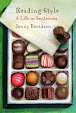
Excited about blurbs accumulating for my style book - official publication date is June, but I should have some copies by the end of May.
Last but not least, trilobite! (Time to reread Richard Fortey's book, I think.)
I enjoyed many of the pieces in MFA vs. NYC, but Alexander Chee's essay was by far my favorite. Leslie Jamison's account of the book is good (via Chloe S.) - I have a review of Jamison's forthcoming essay collection in the next Bookforum, the book's a must-read if you are interested in the contemporary essay or the question of pain, female or otherwise.
Other light reading around the edges: two absolutely delightful young-adult fantasy novels by Sarah Rees Brennan, Unspoken and Untold. These books are perfectly to my taste (they would make a very good television series also) - only I have to wait until September for the next installment!
Stage Kiss at Playwrights Horizons is one of the funniest plays I have seen for a long time - especially in the first half, I was actually laughing uncontrollably out loud. (It was a matinee, so no outright feasting afterwards, but we did have a piece of pie at the diner next door - cherry for me, apple for G.) Between that and Antony and Cleopatra, it was a good weekend for theatergoing. Seeing No Exit tonight at the Pearl; 7pm curtain + short play = more realistic than serious mid-evening theatergoing for a school night.
Closing tabs:
Andrew Solomon on having the demons of depression exorcised - literally.
The inimitable Cintra Wilson watches the Oscars.
Excited about blurbs accumulating for my style book - official publication date is June, but I should have some copies by the end of May.
Last but not least, trilobite! (Time to reread Richard Fortey's book, I think.)
Republics of letters
At Public Books, Simon During on why we should stop defending the humanities (I have to say, I'm completely with him on this - I wish I had written this piece myself, as it beautifully articulates many of the thoughts I regularly have when I read "plight of the humanities" pieces!):
The key consequence of seeing the humanities as a world alongside other broadly similar worlds is that the limits of their defensibility becomes apparent, and sermonizing over them becomes harder. If people stopped watching and playing sports, how much would it matter? The question is unanswerable since we can’t imagine a society continuous with ours but lacking sports, even though one such is, I suppose, possible. We do not have the means to adjudicate between that imaginary sportless society and our own actual sports-obsessed society. The same is true for the humanities. If the humanities were to disappear, new social and cultural configurations would then exist. Would this be a loss or gain? There is no way of telling, partly because we can’t picture what a society and culture that follow from ours but lack the humanities would be like at the requisite level of detail, and partly because, even if we could imagine such a society, our judgment between a society with the humanities and one without them couldn’t appeal to the standards like ours that are embedded in the humanities themselves. The humanities would be gone: that’s it.
Of course, those of us in the humanities who love and breathe them, whose institutional (but not just institutional) lives are formed in relation to them, who would like more people to join them and so become more like us, to think and feel and talk like us, who may even find the “meaning of life” articulated from within them, find the prospect of their fading insupportable, heartrending, unimaginable. But that offers no substantive public reason to maintain them, just as it turned out in the end to be no reason to maintain all the more or less similar worlds that have disappeared over the centuries, before and after modernity: the worlds of the aristocratic honor code; the world of older humanisms and the “republic of letters”; the worlds of industrial working-class solidarity; the world of Scholasticism and the trivium; the worlds of old Anglican rural, parochial, and liturgical life, and so on.
Saturday, March 01, 2014
Kinga-prusha mall
Daniel Nester on the fading of the Philadelphia accent in the movies.
(Have just sent my reader's report to the press. I am not really and truly usually working at 11pm on a Saturday night, but I was so tired that I slept the day away and didn't really start getting traction on the last part of the manuscript until early evening!)
(Have just sent my reader's report to the press. I am not really and truly usually working at 11pm on a Saturday night, but I was so tired that I slept the day away and didn't really start getting traction on the last part of the manuscript until early evening!)
Closing tabs
I have been increasingly conscious, in recent years, of the sense that I am leading exactly the life I should be, and how fortunate I am in that - I like all the things in my life very much, the only problem is that there are too many of them! Today I am basically so tired that all I can do is lie in bed (I am trying to finish reading a book manuscript I need to write a reader's report on this weekend, working in bed is contraindicated from a sleep hygiene point-of-view but sometimes it is the only way to get anything done).
(I always think that if I were a mathematician, I would often be working in bed with my eyes closed!)
Flew back from Cayman Wednesday evening, got my first set of shots at the new allergy doctor Thursday morning, taught Thomas Jefferson Thursday afternoon, had my demanding Friday-morning meeting and then after nap and regrouping met G. at the Public Theater in the evening for a grippingly watchable Anthony and Cleopatra (not a perfect production, slightly too many disparate elements that don't quite gel, but you can't take your eyes off it - I really loved it) and dinner afterwards at the very nice newish restaurant there.
At that point it was after midnight and frigidly cold, but it proved impossible to get a cab, so I walked G. home via Greene St. and then headed across town on foot to the 1 train. Got home around 1:15, but it takes a couple hours for me to wind down after that and go to sleep - got to sleep finally around 3:30am, didn't wake up till 1pm, and went back to bed after some breakfast - I had unrealistic hopes for exercise today, but really I just have to dig in and get this work done, tomorrow will offer some opportunities too....
I finished rereading the last of the four Arthur books by Mary Stewart; as I dimly remembered, the fourth is much less good than the first three (she has various narrative and story conundrums to deal with, and the result is that she's working in a sort of chronicle mode, very readable but much less deeply satisfying than the first-person narration of the main trilogy).
I really like having a multi-volume sequence of novels to read or reread - might ponder what from the archives could be revisited over the next two weeks as I attempt to survive the workload between now and spring break.
(I will get a few days breather then, but unfortunately can't go and see B., as I have to go to Colonial Williamsburg at the end of the week for my eighteenth-century studies conference, grrrr... not looking forward to the eight-hour train ride each way, and am sorry to say that I am mean-spiritedly intent on skipping the masquerade ball - it is simply beyond what I can face, and I am thinking I will have a happy introvert's dinner instead at home alone in my hotel room with a book!)
Closing tabs:
At the LRB, Adam Mars-Jones on Beckett's "Not I."
Elaine Scarry's voice in the wilderness.
10 reasons to celebrate The Roots' Things Fall Apart on its fifteenth anniversary. (This is really one of my favorite albums, in fact I am feeling a strong desire to listen to it right now!)
The elusive role of dance in modernism.
Nobody said that then!
You can't see Bitcoins. (Via BoingBoing.)
The culling of zoo animals.
Finally, an excerpt from Juliet Macur's forthcoming book on Lance Armstrong - I'm keen to read this one, it will be published Tuesday. Am currently dug in on the to-me-curiously-not-relevant-though-still-interesting MFA vs. NYC: The Two Cultures of American Fiction.
(I always think that if I were a mathematician, I would often be working in bed with my eyes closed!)
Flew back from Cayman Wednesday evening, got my first set of shots at the new allergy doctor Thursday morning, taught Thomas Jefferson Thursday afternoon, had my demanding Friday-morning meeting and then after nap and regrouping met G. at the Public Theater in the evening for a grippingly watchable Anthony and Cleopatra (not a perfect production, slightly too many disparate elements that don't quite gel, but you can't take your eyes off it - I really loved it) and dinner afterwards at the very nice newish restaurant there.
At that point it was after midnight and frigidly cold, but it proved impossible to get a cab, so I walked G. home via Greene St. and then headed across town on foot to the 1 train. Got home around 1:15, but it takes a couple hours for me to wind down after that and go to sleep - got to sleep finally around 3:30am, didn't wake up till 1pm, and went back to bed after some breakfast - I had unrealistic hopes for exercise today, but really I just have to dig in and get this work done, tomorrow will offer some opportunities too....
I finished rereading the last of the four Arthur books by Mary Stewart; as I dimly remembered, the fourth is much less good than the first three (she has various narrative and story conundrums to deal with, and the result is that she's working in a sort of chronicle mode, very readable but much less deeply satisfying than the first-person narration of the main trilogy).
I really like having a multi-volume sequence of novels to read or reread - might ponder what from the archives could be revisited over the next two weeks as I attempt to survive the workload between now and spring break.
(I will get a few days breather then, but unfortunately can't go and see B., as I have to go to Colonial Williamsburg at the end of the week for my eighteenth-century studies conference, grrrr... not looking forward to the eight-hour train ride each way, and am sorry to say that I am mean-spiritedly intent on skipping the masquerade ball - it is simply beyond what I can face, and I am thinking I will have a happy introvert's dinner instead at home alone in my hotel room with a book!)
Closing tabs:
At the LRB, Adam Mars-Jones on Beckett's "Not I."
Elaine Scarry's voice in the wilderness.
10 reasons to celebrate The Roots' Things Fall Apart on its fifteenth anniversary. (This is really one of my favorite albums, in fact I am feeling a strong desire to listen to it right now!)
The elusive role of dance in modernism.
Nobody said that then!
You can't see Bitcoins. (Via BoingBoing.)
The culling of zoo animals.
Finally, an excerpt from Juliet Macur's forthcoming book on Lance Armstrong - I'm keen to read this one, it will be published Tuesday. Am currently dug in on the to-me-curiously-not-relevant-though-still-interesting MFA vs. NYC: The Two Cultures of American Fiction.
Friday, February 28, 2014
Monday, February 24, 2014
Saturday, February 22, 2014
Prosthesis
We really are living in a great age of prosthetics (it is one of my favorite things about doing the New York City Triathlon, too, which is otherwise a rather overpriced and crowded and hot race, that you see so many young fast athletes racing on prosthetic legs). (FT site registration required.)

(Photo credit: Takao Ochi for the FT)
This picture makes me think of my mild prejudice against most performance art - given the possibilities of avant-garde musical performance, why wouldn't you be a musician instead? You get all the potentially good parts of performance art plus music....
Writing from Cayman. I made it here safely, only as so often the case at the cost of a minor lung ailment! No exercise this weekend, accordingly & unfortunately, but it is still very nice to be here, even with massive pile of work and lungs like creaky bellows. Light reading along the route: Mark Billingham, From the Dead (not actually a new book and rather inferior to the usual Thorne standard, which may explain why it wasn't published in the US at the time); Victor Gischler, The Deputy (enjoyable gonzo noir, slightly under-proofread); James S. A. Corey, The Butcher of Anderson Station. Just now dug in on the first installment of one of my favorite books from childhood, one of the best value-for-money (re)reading opportunities on the internet!

(Photo credit: Takao Ochi for the FT)
This picture makes me think of my mild prejudice against most performance art - given the possibilities of avant-garde musical performance, why wouldn't you be a musician instead? You get all the potentially good parts of performance art plus music....
Writing from Cayman. I made it here safely, only as so often the case at the cost of a minor lung ailment! No exercise this weekend, accordingly & unfortunately, but it is still very nice to be here, even with massive pile of work and lungs like creaky bellows. Light reading along the route: Mark Billingham, From the Dead (not actually a new book and rather inferior to the usual Thorne standard, which may explain why it wasn't published in the US at the time); Victor Gischler, The Deputy (enjoyable gonzo noir, slightly under-proofread); James S. A. Corey, The Butcher of Anderson Station. Just now dug in on the first installment of one of my favorite books from childhood, one of the best value-for-money (re)reading opportunities on the internet!
Friday, February 21, 2014
Wednesday, February 19, 2014
Regeneration
I have a secret passion for the group blog Anole Annals - anoles are one of the critters I most enjoy watching in Cayman - but the pictures at this post are particularly appealing!
Tonight at Barnard
Emily Wilson is lecturing tonight at Barnard - I'm really looking forward to this one:
Emily Wilson, author of various books including The Death of Socrates and translator of Six Tragedies of Seneca, discusses the challenges she has encountered in her current project: re-translating Homer. In particular, she focuses on the problem of translating violence and ponders how a modern translator can render into modern English one of the most violent authors of all time.
Ruined by a passion for the Russians
From P.J. Kavanagh, The Perfect Stranger:
I liked David Remnick's piece some years ago on translation:
Whatever my self-dissatisfaction I knew I had one gift for sure, an ability to recognise the best when my nose was rubbed into it. Indeed it was sometimes more like a curse, accounting for my restless disappointment with almost everything. But the best I was willing to give my life to, and it needs that kind of service. It is true that beauty is in the eye of the beholder, it needs recognition to be fully itself; appreciation gives it a patina, helps it to bloom.Another aside that snagged my attention: "(It was about this time that I realised my greatest single literary influence had been Constance Garnett. Any chance of a decent style I'd ever had, ruined by my passion for the Russians.)"
I liked David Remnick's piece some years ago on translation:
As a literary achievement, Garnett’s may have been of the second order, but it was vast. With her pale, watery eyes, her gray hair in a chignon, she was the genteel face of tireless industry. She translated seventy volumes of Russian prose for commercial publication, including all of Dostoyevsky’s novels; hundreds of Chekhov’s stories and two volumes of his plays; all of Turgenev’s principal works and nearly all of Tolstoy’s; and selected texts by Herzen, Goncharov, and Ostrovsky. A friend of Garnett’s, D. H. Lawrence, was in awe of her matter-of-fact endurance, recalling her “sitting out in the garden turning out reams of her marvelous translations from the Russian. She would finish a page, and throw it off on a pile on the floor without looking up, and start a new page. That pile would be this high—really, almost up to her knees, and all magical.”But I want to read someone's more ruminative essay on Garnett, Moncrieff and the other incredibly productive and influential translators of the late nineteenth and early twentieth centuries (James Strachey's Freud should be in there too?). Andre Aciman prefers the Moncrieff translation to Lydia Davis et al.
Sunday, February 16, 2014
The rhythm of the semester
Slightly grumpy about the fact that train delays meant that I didn't get to 10am hot yoga - I waited on the platform for a few minutes to see if predicted train time (15min - usually it takes me 15min door to door!) would be reduced, but it didn't seem the odds were good that I'd get there in time for class, so I went and got cooked breakfast instead at the Deluxe Diner. Morning task is checking the PDF of my style index - if I can get a chunk of work done on that, maybe I can go to 12:30 yoga instead....
I am finding this semester's work genuinely stimulating and fresh, but it is also kicking my ass! Again slept for 4 hours yesterday afternoon due to cumulative fatigue of the week. Busy week ahead, including evening work things on Wednesday and Thursday - but then I am flying to see B. very early Friday morning. I have to take quite a lot of work with me, but there will be spinning and a 3hr outdoor ride and yoga for sure as well.
Very small amounts of light reading around the edges of slightly insane piles of work reading: Ian Rankin, Saints of the Shadow Bible; Ben Aaronovitch, Broken Homes (latest installment in the Rivers of London series). I still want someone to make a massive chart of how the fantasy police-procedural mode snowballed into a dominant subgenre - I suspect that there are strong television antecedents that are largely outside my ken (Doctor Who?).
Closing tabs:
At the Guardian, Andy Beckett on the lasting impact of Raymond Williams' Keywords.
Leslie Jamison on the syndrome called Morgellons (her forthcoming collection is The Empathy Exams).
Last but not least, an astonishing demonstration of the behaviour-warping allure of fried potatoes!
I am finding this semester's work genuinely stimulating and fresh, but it is also kicking my ass! Again slept for 4 hours yesterday afternoon due to cumulative fatigue of the week. Busy week ahead, including evening work things on Wednesday and Thursday - but then I am flying to see B. very early Friday morning. I have to take quite a lot of work with me, but there will be spinning and a 3hr outdoor ride and yoga for sure as well.
Very small amounts of light reading around the edges of slightly insane piles of work reading: Ian Rankin, Saints of the Shadow Bible; Ben Aaronovitch, Broken Homes (latest installment in the Rivers of London series). I still want someone to make a massive chart of how the fantasy police-procedural mode snowballed into a dominant subgenre - I suspect that there are strong television antecedents that are largely outside my ken (Doctor Who?).
Closing tabs:
At the Guardian, Andy Beckett on the lasting impact of Raymond Williams' Keywords.
Leslie Jamison on the syndrome called Morgellons (her forthcoming collection is The Empathy Exams).
Last but not least, an astonishing demonstration of the behaviour-warping allure of fried potatoes!
Tuesday, February 11, 2014
Sunday, February 09, 2014
Catch-up
My mother was commiserating with me on the telephone about my self-proclaimed lack of time this semester for light reading, but I had to allow as how I'd read a few books over the weekend (this was last week), which made her laugh and observe that really if the day comes that I do not have time for light reading, it is only because I am dead! Have spent spare moments and late nights over the past week devouring volumes one through four of Elizabeth Jane Howard's Cazalet Chronicle. Have just bought the final volume for Kindle (the first four I had to gather through BorrowDirect and library - it is a pity they are not available as an electronic bundle).
Tessa Hadley's LRB piece seems to me right, but perhaps understates the pure enjoyable readability of the novels taken as a sequence: I would compare them slightly unfavorably on the one hand to Sybille Bedford and Rebecca West, and on the other to series-novel geniuses like Susan Howatch (the Church of England books, not the earlier ones which are much less interesting to me) or Dorothy Dunnett, and yet this is really not fair insofar as they are really providing one of the most immersive and enjoyable reading experiences I have had for years.
Good cultural bits: heard a very lovely recital by pianist Simon Mulligan the other day at the Morgan Library (it is not my canon, but I forgot how beautiful the shimmery bits of Ravel are when played really well, and the Schumann fantasies are perfect - capped, enjoyably, by Speckled Hen at the Shakespeare); and my friend Toni Schlesinger's captivating Mystery of Pearl Street at Dixon Place (dinner after with G. - steak frites, deliciously - at Jacques).
Very busy week of work upcoming, but I am thoroughly enjoying this semester: the reading and thinking for my big committee are stimulating (the other demanding committee I'm on, attempting to reconceive the basic science requirement in Columbia's Core, also very interesting), and my solitary seminar is super-fun (Robinson Crusoe last week, Gulliver's Travels this Thursday).
Having a hard time fitting in quite enough exercise, but hoping to do better as the days get warmer and longer (saw asthma doc last week and he is pretty clear, which really I know intuitively, that if you have exercise-induced asthma it is a bad idea to exercise outdoors in temperatures below freezing - I am hoping to have a bit of a run on the indoor track at Chelsea Piers tomorrow afternoon).
Tessa Hadley's LRB piece seems to me right, but perhaps understates the pure enjoyable readability of the novels taken as a sequence: I would compare them slightly unfavorably on the one hand to Sybille Bedford and Rebecca West, and on the other to series-novel geniuses like Susan Howatch (the Church of England books, not the earlier ones which are much less interesting to me) or Dorothy Dunnett, and yet this is really not fair insofar as they are really providing one of the most immersive and enjoyable reading experiences I have had for years.
Good cultural bits: heard a very lovely recital by pianist Simon Mulligan the other day at the Morgan Library (it is not my canon, but I forgot how beautiful the shimmery bits of Ravel are when played really well, and the Schumann fantasies are perfect - capped, enjoyably, by Speckled Hen at the Shakespeare); and my friend Toni Schlesinger's captivating Mystery of Pearl Street at Dixon Place (dinner after with G. - steak frites, deliciously - at Jacques).
Very busy week of work upcoming, but I am thoroughly enjoying this semester: the reading and thinking for my big committee are stimulating (the other demanding committee I'm on, attempting to reconceive the basic science requirement in Columbia's Core, also very interesting), and my solitary seminar is super-fun (Robinson Crusoe last week, Gulliver's Travels this Thursday).
Having a hard time fitting in quite enough exercise, but hoping to do better as the days get warmer and longer (saw asthma doc last week and he is pretty clear, which really I know intuitively, that if you have exercise-induced asthma it is a bad idea to exercise outdoors in temperatures below freezing - I am hoping to have a bit of a run on the indoor track at Chelsea Piers tomorrow afternoon).
Saturday, February 08, 2014
My family and other animals
At the FT, Ben Martynoga visits Jane Goodall in her family home at Bournemouth. Really enchanting picture at the bottom of Goodall's "favorite thing": 
(Photo credit: Victoria Birkenshaw.)
It is difficult to overstate the extent of my youthful obsession with Goodall: I really thought for many years that it would be my vocation in life to go and study chimpanzees (or perhaps gorillas) in their natural habitats. I can't pin the date down exclusively, but the book that was my utter obsession the year I turned eight was In the Shadow of Man. I read it again and again - and in fact in childhood times of stress and trouble I would retire to my room and contemplate the chimpanzee family trees on the endpapers and think about how much better life would be if I were living with a tribe of chimpanzees instead of a human family!
As a 12-year-old, she joined eight matchboxes together to make a stack of small drawers and filled them with dozens of handwritten scrolls; each slip of paper contains a quote from the Bible. Goodall made this Bible box as a gift for her grandmother and, for more than 50 years, the family have used it as an inspirational lottery.

(Photo credit: Victoria Birkenshaw.)
It is difficult to overstate the extent of my youthful obsession with Goodall: I really thought for many years that it would be my vocation in life to go and study chimpanzees (or perhaps gorillas) in their natural habitats. I can't pin the date down exclusively, but the book that was my utter obsession the year I turned eight was In the Shadow of Man. I read it again and again - and in fact in childhood times of stress and trouble I would retire to my room and contemplate the chimpanzee family trees on the endpapers and think about how much better life would be if I were living with a tribe of chimpanzees instead of a human family!
Thursday, February 06, 2014
Wednesday, February 05, 2014
Tuesday, February 04, 2014
"Sorry, H.T.L."
A lovely set of reminiscences of the late John Hollander by a set of distinguished Spenserians. (Courtesy of Jenn Lewin, whose piece is especially good.) Taken together, they really convey what it was like to spend time with John; here is Stephen Orgel for instance on a summer spent working with John on an index for his father-in-law's book:
Anne’s father, Arthur Loesser, a musicologist and a superb pianist, had written a history of the piano, and we spent two months preparing a copious index. We would work all day in an attic study, reading proofs and making index cards, which included entries for an increasing number of fictitious composers and parodic keyboard instruments invented by John—Arthur eventually complained that we were using too many index cards, but on the whole he was a singularly indulgent employer and host, and much of our work was conducted in a condition of high hilarity. We would descend at the end of the day, and Arthur would ask for the most arcane or absurd items we had indexed, and would then play them for us, astoundingly, from memory. I still recall his spirited rendition of Kotswara’s Battle of Prague, for which he provided a moving commentary (“Cries of the wounded and dying”; “Field Marshall Maximilian orders a retreat”). The prodigy Leopoldine Blahetka, who was pronounced an excellent pianist when she played for Beethoven at the age of 5 (by which time, John immediately pointed out, Beethoven was totally deaf) remained a figure in our personal mythology for years afterward.And this is Kenneth Gross, capturing better than anything else I have seen the texture of John's teaching:
Innumerable moments from his intense and rambling seminars still stick in my mind. I remember how he improvised a self-descriptive pastiche of a song-setting by Handel, sung in gravelly tenor, in order to demonstrate how music and text might mutually sustain and gloss each other in this composer’s work (a performed version of the kinds of poetic examples which compose his Rhyme’s Reason). I remember how, when we were reading Book V of The Faerie Queene, he said of the Egalitarian Giant: that giant is John Rawls, and one of the troubling things about American intellectual life these days is that John Rawls hasn’t read Spenser, and that most Spenser scholars have not read John Rawls. I remember how he traced the journey made by the phrase “wat’ry flower” as it passed from lines describing the dying Narcissus in the Gardens of Adonis to Robert Frost’s “Spring Pools”—the account reminded you not just of Frost’s powers of echo and revision but of just how strange the original phrase itself is.
I remember his response to a comment of mine in a Milton seminar, when I said that perhaps, after all, Samson Agonistes couldn’t be staged, for how could you imagine someone coming on stage in a shaggy wig, and suddenly discovering that his hair is troped—John looked at me somewhat disapprovingly, and said: “That’s why there are actors.” I remember a wonderful excursion on the history of aspirin (the first truly synthetic drug, whose name spoke of hope), which glossed the figure of the “Canon Aspirin” in Wallace Stevens’s “Notes Toward a Supreme Fiction.” I remember how, dwelling on a line from Thomas Hardy’s “During Wind and Rain”—“And the rotten rose is ript from the wall”—he conveyed a kind breathless delight in the look and substance of an actual rotted rose.
The world outside college
Colin Winnette interviews Lydia Millet for the Believer. Here she describes time spent in her twenties as a copy editor at Larry Flynt Publications:
My favorite was the reader mail. There, technically, I guess we’re talking full-out psychosis more than anything—inmates were our biggest correspondents. Once, Richard Ramirez called my editor up on the phone. Our readers sent us rude ephemera, potatoes shaped like penises—that kind of deal. The neurotics were mostly coworkers, people who did bondage sessions right in their offices, friendly cross-dressers, aging queens in bad wigs. I liked many of them very much.
Saturday, February 01, 2014
On the tiles
Pornographic tiles discovered at Ye Olde Cheshire Cheese (via James Caudle):
The scenes depicted are so explicit that we are unable to reproduce them here in their entirety. One of the milder images features a woman who is kneeling behind a man holding a bunch of twigs, and beating him on his naked buttocks. She is dressed in a low-necked 18th-century-style dress with overskirt and frills on the sleeves, while the man's trousers are around his knees.
Sleeping in
I was so phenomenally tired last night that I accidentally fell asleep from 6pm to 9pm with the lights on and 2 cats sprawled beside me on the bed. Then I couldn't sleep till late, maybe 2am: but it was clear when the alarm went off at 8:45 that I was not really ready to get up, despite the pull of my beloved 10am spin class. Messaged the teacher to let her know I wouldn't be there, then went back to bed. It was the right choice - I feel much more functional now, and will go out for an easy 90-minute run in another hour or so (it is 40 degrees and sunny!).
Saw a very poor play by Brecht on Wednesday (not recommended, though there are some funny bits and the production's not bad); good grilled ham and cheese sandwich afterwards with G. at Linen Hall.
Saw an amazing film called The Unseen Sequence yesterday at Lincoln Center with friends. Particularly mesmerizing are the teaching sequences, but really the whole thing was incredibly worthwhile (and with some lovely music also). A treat afterwards - their friend who works at the Met gave us an amazing behind-the-scenes tour, including the "dome" (little box up at the very top above the chandelier) and the hydraulic lift - gigantic pistons! - used to bring up enormous scenery from the bowels of the complex to the stage. Then another grilled cheese sandwich, this time with tomato soup (I had rushed straight from a long morning meeting to the movie, it was 3:30 and I was dropping from fatigue and hunger!), at the Alice Tully cafe.
I am much enjoying this semester so far, but it has a very different work rhythm than my usual - the committee load is extremely heavy (it is fascinating work, though, and very well-suited to my inclinations and abilities - basically reading and synthesizing huge amounts of material across a wide range of fields), with deadlines on Wednesday morning for report-writing and Friday morning for the meeting itself, and my class is Thursday afternoon. Won't have much time for leisure reading, but it is a worthwhile tradeoff (confidentiality prevents me from linking to either of the 2 books I read this week, or to any of the four candidates for tenure we discussed at our meeting yesterday). The weekend feels more relaxed because of not teaching on Mondays, but I have to make it through to the end of the week intact, rather than collapsing happily on Wednesday evening when I am mostly done.
Light reading around the edges: a comfort reread of Gerald Durrell's My Family and Other Animals (can't remember now what reminded me of this - it is a book I read many many times as a child, I loved it, I practically know it by heart - but I bought this copy for B., who doesn't know it, and then couldn't resist rereading it myself first); and I am well dug in on Rebecca Mead's absolutely lovely My Life in Middlemarch, which is gloriously good. I have been thinking a lot about what books I want to write next, and I think I am on a Rebecca Mead-Geoff Dyer-Francis Spufford axis of writing about reading, though with more similarities I think to Spufford than to either of the other two....
Saw a very poor play by Brecht on Wednesday (not recommended, though there are some funny bits and the production's not bad); good grilled ham and cheese sandwich afterwards with G. at Linen Hall.
Saw an amazing film called The Unseen Sequence yesterday at Lincoln Center with friends. Particularly mesmerizing are the teaching sequences, but really the whole thing was incredibly worthwhile (and with some lovely music also). A treat afterwards - their friend who works at the Met gave us an amazing behind-the-scenes tour, including the "dome" (little box up at the very top above the chandelier) and the hydraulic lift - gigantic pistons! - used to bring up enormous scenery from the bowels of the complex to the stage. Then another grilled cheese sandwich, this time with tomato soup (I had rushed straight from a long morning meeting to the movie, it was 3:30 and I was dropping from fatigue and hunger!), at the Alice Tully cafe.
I am much enjoying this semester so far, but it has a very different work rhythm than my usual - the committee load is extremely heavy (it is fascinating work, though, and very well-suited to my inclinations and abilities - basically reading and synthesizing huge amounts of material across a wide range of fields), with deadlines on Wednesday morning for report-writing and Friday morning for the meeting itself, and my class is Thursday afternoon. Won't have much time for leisure reading, but it is a worthwhile tradeoff (confidentiality prevents me from linking to either of the 2 books I read this week, or to any of the four candidates for tenure we discussed at our meeting yesterday). The weekend feels more relaxed because of not teaching on Mondays, but I have to make it through to the end of the week intact, rather than collapsing happily on Wednesday evening when I am mostly done.
Light reading around the edges: a comfort reread of Gerald Durrell's My Family and Other Animals (can't remember now what reminded me of this - it is a book I read many many times as a child, I loved it, I practically know it by heart - but I bought this copy for B., who doesn't know it, and then couldn't resist rereading it myself first); and I am well dug in on Rebecca Mead's absolutely lovely My Life in Middlemarch, which is gloriously good. I have been thinking a lot about what books I want to write next, and I think I am on a Rebecca Mead-Geoff Dyer-Francis Spufford axis of writing about reading, though with more similarities I think to Spufford than to either of the other two....
Thursday, January 30, 2014
End-of-the-week news
Phenomenally tired; must buckle down and do one more hour of reading before bed. What I don't have but would like: parabolic sherry!
Tuesday, January 28, 2014
Closing tabs
I am looking at an unprecedented semester in which I have so much other reading to do, I hardly have any time in the week for light reading!
One book that I do intend to read at the earliest possible juncture, though, is Rebecca Mead's My Life in Middlemarch, published today. Here is a very good interview at the Millions; she says exactly what I think, too, about the important distinction between literature and self-help:
Flight paths of fireflies.
Mole locomotion!
One book that I do intend to read at the earliest possible juncture, though, is Rebecca Mead's My Life in Middlemarch, published today. Here is a very good interview at the Millions; she says exactly what I think, too, about the important distinction between literature and self-help:
TM: Where’s the line between self-help and literature? George Eliot, maybe more than most novelists, rather explicitly wanted to make her readers better. I admire how your book is not “How George Eliot Can Change Your Life In Seventeen Steps.” Where do you think that line is?Closing tabs:
RM: I began with a piece in The New Yorker that was about the origin of this quotation — “It’s never too late to be what you might have been” — and I wanted to disprove that Eliot had said it. I didn’t disprove it, though I still don’t believe that she said it. When I started thinking about writing this book, I thought maybe I could do chapters based on twelve or thirteen things she did say. But I realized that this didn’t work at all, because that’s not how she works. When you separate what look like nuggets of wisdom from the text, they can make nice refrigerator magnets, but they’re just phrases. I think you have to read the whole book in order for it to make any real difference in your life. Because while you’re reading Middlemarch, you have the experience of empathy. You’re not simply told to be empathetic. You have your empathy shift from one character to another. And you have it change as you go back to the book over time, as most serious readers do. Middlemarch doesn’t tell you how to live, but reading Middlemarch, knowing Middlemarch, thinking about Middlemarch, helps you think about how to live for yourself. It’s a more demanding process than simply being told how to live.
Flight paths of fireflies.
Mole locomotion!
Sunday, January 26, 2014
"What would Bowie do?"
Boy George's life soundtrack. I have never had a strong relationship with the Boy George oeuvre, but it is a great list!
(I saw Taboo with G. when it was on Broadway some years ago; it was surprisingly enjoyable. I have one semi-sentimental association with Boy George: the summer I turned thirteen I did a ton of babysitting, due to a good arrangement made with my mother. I was already taking lessons on two musical instruments, clarinet and recorder, but I felt that I would die if I could not learn to play the oboe as well [I'd always had a longing for it, but some off-the-books bassoon lessons from a visiting Scottish exchange student had further whetted my appetite], and she made a deal with me that if I made enough money to buy the instrument, she would pay for the lessons! We found an oboe for $125 and it cost about $125 more for repairs, which she generously paid as well; things were cheaper in those days, but on the other hand babysitting in that time and place only paid $2/hr., so it took quite a lot of hours regardless. My main babysitting gig was 9-1 four or so days a week for 2 endearing but tiring hellions; their favorite game was to pretend that they were Jimmy Connors and John McEnroe and whack each other with tennis rackets. I did babysit them fairly regularly in the evening as well, and when I was putting them to bed, we always listened to one of the two cassettes they possessed: Michael Jackson's Thriller or Culture Club's Colour By Numbers. 1984 in a nutshell.)
(I saw Taboo with G. when it was on Broadway some years ago; it was surprisingly enjoyable. I have one semi-sentimental association with Boy George: the summer I turned thirteen I did a ton of babysitting, due to a good arrangement made with my mother. I was already taking lessons on two musical instruments, clarinet and recorder, but I felt that I would die if I could not learn to play the oboe as well [I'd always had a longing for it, but some off-the-books bassoon lessons from a visiting Scottish exchange student had further whetted my appetite], and she made a deal with me that if I made enough money to buy the instrument, she would pay for the lessons! We found an oboe for $125 and it cost about $125 more for repairs, which she generously paid as well; things were cheaper in those days, but on the other hand babysitting in that time and place only paid $2/hr., so it took quite a lot of hours regardless. My main babysitting gig was 9-1 four or so days a week for 2 endearing but tiring hellions; their favorite game was to pretend that they were Jimmy Connors and John McEnroe and whack each other with tennis rackets. I did babysit them fairly regularly in the evening as well, and when I was putting them to bed, we always listened to one of the two cassettes they possessed: Michael Jackson's Thriller or Culture Club's Colour By Numbers. 1984 in a nutshell.)
Thursday, January 23, 2014
First seminar meeting
I've tweaked the syllabus quite a bit since the last time I taught it, adding a few new books and subtracting various other stuff. These are the books on order at Book Culture (other primary texts include Virgil's Georgics as translated by Dryden and Johnson's prefatory materials for the Dictionary). It's a graduate seminar, but I have admitted a few undergraduates to keep things lively....
Defoe, Robinson Crusoe (Norton)
Swift, Gulliver's Travels (Oxford World's Classics)
Rousseau, Discourse on the Origin of Inequality (Oxford World’s Classics)
Jefferson, Notes on the State of Virginia (Penguin)
Smollett, The Expedition of Humphry Clinker (Oxford World's Classics)
Johnson and Boswell, A Journey to the Western Islands of Scotland and The Journal of a Tour to the Hebrides (Penguin)
Rousseau, Emile (Basic Books)
Wollstonecraft, Vindications (Broadview)
Burney, Camilla (Oxford World’s Classics)
Austen, Emma (Oxford World's Classics)
Defoe, Robinson Crusoe (Norton)
Swift, Gulliver's Travels (Oxford World's Classics)
Rousseau, Discourse on the Origin of Inequality (Oxford World’s Classics)
Jefferson, Notes on the State of Virginia (Penguin)
Smollett, The Expedition of Humphry Clinker (Oxford World's Classics)
Johnson and Boswell, A Journey to the Western Islands of Scotland and The Journal of a Tour to the Hebrides (Penguin)
Rousseau, Emile (Basic Books)
Wollstonecraft, Vindications (Broadview)
Burney, Camilla (Oxford World’s Classics)
Austen, Emma (Oxford World's Classics)
Tuesday, January 21, 2014
Negative influences
Thomas Mallon and Daniel Mendelsohn on the books they didn't want to write.
Snowpocalypse! My late-afternoon pulmonary function test is canceled (rescheduled for Feb. 4, and not urgent, so that's fine). I am about to gear up and head in to the office to see if I can dig out the folders and files from the last time I taught my graduate seminar on the idea of culture; as always, I am bemoaning my lack of a beautiful filing system in which I would leave each semester's teaching stuff in meticulously organized and easily locatable form!
Snowpocalypse! My late-afternoon pulmonary function test is canceled (rescheduled for Feb. 4, and not urgent, so that's fine). I am about to gear up and head in to the office to see if I can dig out the folders and files from the last time I taught my graduate seminar on the idea of culture; as always, I am bemoaning my lack of a beautiful filing system in which I would leave each semester's teaching stuff in meticulously organized and easily locatable form!
Monday, January 20, 2014
Closing tabs
A short history of Velveeta. (Via B.)
Backformation of "hair" from "hairy"?
Miscellaneous light reading: Ned Beauman, The Teleportation Accident (very good); Rhiannon Held, Tarnished (I am always regretful after reading a book in this genre, this one is quite good but no exception to that rule - I am not the target audience!); Bill Loehfelm, The Devil In Her Way (this series is excellent); Jon Bassoff, Corrosion (slightly too Faulkneresque for my taste, but genuinely chilling, a good recommendation from Heath Lowrance); "James S. A. Corey"'s The Gods of Risk novella; and, inevitably, Cat Sense: The Feline Enigma Revealed! Which I finished on the plane home from Cayman this afternoon: gearing up for bitter cold and the first days of a new semester.
Backformation of "hair" from "hairy"?
Miscellaneous light reading: Ned Beauman, The Teleportation Accident (very good); Rhiannon Held, Tarnished (I am always regretful after reading a book in this genre, this one is quite good but no exception to that rule - I am not the target audience!); Bill Loehfelm, The Devil In Her Way (this series is excellent); Jon Bassoff, Corrosion (slightly too Faulkneresque for my taste, but genuinely chilling, a good recommendation from Heath Lowrance); "James S. A. Corey"'s The Gods of Risk novella; and, inevitably, Cat Sense: The Feline Enigma Revealed! Which I finished on the plane home from Cayman this afternoon: gearing up for bitter cold and the first days of a new semester.
Saturday, January 18, 2014
"this dot, here, this one"
Closing tabs:
Kathryn Schulz on five of the best punctuation marks in literature.
More on indexing. (Courtesy of Dave Lull.)
Mr. Chicken! (I have ordered the book.)
NB many fewer chickens hereabouts than when I was in Cayman in August. B.'s theory: inverse relationship to invasive green iguana population; iguanas like to eat eggs! Fewer of certain other birds, too; I like how the populations are always shifting (much higher proportion of various anoles to northern curly-tailed lizards, also, compared to five years ago, but this sort of thing really concerns micro-environments - geckos are abundant at Regal Beach half a mile down the road, but we don't see many here at the Grandview, though one occasionally makes its way indoors, leading to presence of a plastic cup and piece of paper in the kitchen cupboards with pertinent label "gecko trapper" - that particular discrepancy probably has to do with how well the gecko can camouflage itself against a sand-colored wall versus a light blue one).
Kathryn Schulz on five of the best punctuation marks in literature.
More on indexing. (Courtesy of Dave Lull.)
Mr. Chicken! (I have ordered the book.)
NB many fewer chickens hereabouts than when I was in Cayman in August. B.'s theory: inverse relationship to invasive green iguana population; iguanas like to eat eggs! Fewer of certain other birds, too; I like how the populations are always shifting (much higher proportion of various anoles to northern curly-tailed lizards, also, compared to five years ago, but this sort of thing really concerns micro-environments - geckos are abundant at Regal Beach half a mile down the road, but we don't see many here at the Grandview, though one occasionally makes its way indoors, leading to presence of a plastic cup and piece of paper in the kitchen cupboards with pertinent label "gecko trapper" - that particular discrepancy probably has to do with how well the gecko can camouflage itself against a sand-colored wall versus a light blue one).
Friday, January 17, 2014
Hair-raising
A 1768 account of hair-dressing from The London Magazine, or Gentleman's Monthly Intelligencer, as given in Julia Allen's Swimming with Dr Johnson and Mrs Thrale: Sport, Health and Exercise in eighteenth-century England:
When Mr. Gilchrist opened my aunt's head, as he called it, I must confess it's effluvias affected my sense of smelling disagreeably, which stench, however, did not surprize me, when I observed the great variety of materials employed in raising the dirty Fabrick. False locks to supply the great deficiency of native hair, pomatum with profusion, great wool to bolster up the adopted locks, and grey powder to conceal at once age and dirt, and all these caulked together by pins of an indecent length, and corresponding colour. When the comb was applied to the natural hair, I observed swarms of animalculas running about in the utmost consternation, and in different directions, upon which I put my chair a little further from the table, and asked the operator whether that numerous swarm did not from time to time send out colonies to other parts of the body? He assured me that they could not; for that the quantity of powder and pomatum formed a glutinous matter, which, like limetwiggs to birds, caught and clogged the little natives, and prevented their migration.
Thursday, January 16, 2014
One more letter
Index is now sent. Have also rather haplessly written to see if I might be able to elicit a few blurbs, though the fact is that if all you have is someone's Twitter and Facebook contact information, it is relatively unlikely that they will respond! I have three already, notionally, so really that is enough....
My January spell in Cayman is almost at an end. On my return to New York, I am going to be plunged immediately into the thick of a very busy spring semester - next week will be frenetic, but after that I hope I will be able to settle in to a good work and exercise schedule.
The letter R:
Raymond, Derek, 57
reading, 92-94, 176; addiction to, 3; childhood, 4, 7, 35; developmental stages of, 8; at different ages, 68-70; ethics of, 1-2; “mouthy,” 27-28, 30; pathologies of, 3; for pleasure, 6-7, 8, 133; speed of, 3; voluminous, 7; as way of life, 8
realism, 15-16, 153
record-keeping, 126
rejection, 85-86
Rembrandt, The Anatomy Lesson, 140-41
repetition, 41, 56-61, 63, 172-73; and humor, 57-60
rereading, 9, 35-36, 69
revision, 71, 98; by re-typing, 122
rhetoric, 73; see also periods
Richardson, Samuel, Clarissa, 56, 84, 97
risk-taking, emotional, 171
Rousseau, Confessions, 109
rule-breaking, 180n4
My January spell in Cayman is almost at an end. On my return to New York, I am going to be plunged immediately into the thick of a very busy spring semester - next week will be frenetic, but after that I hope I will be able to settle in to a good work and exercise schedule.
The letter R:
Raymond, Derek, 57
reading, 92-94, 176; addiction to, 3; childhood, 4, 7, 35; developmental stages of, 8; at different ages, 68-70; ethics of, 1-2; “mouthy,” 27-28, 30; pathologies of, 3; for pleasure, 6-7, 8, 133; speed of, 3; voluminous, 7; as way of life, 8
realism, 15-16, 153
record-keeping, 126
rejection, 85-86
Rembrandt, The Anatomy Lesson, 140-41
repetition, 41, 56-61, 63, 172-73; and humor, 57-60
rereading, 9, 35-36, 69
revision, 71, 98; by re-typing, 122
rhetoric, 73; see also periods
Richardson, Samuel, Clarissa, 56, 84, 97
risk-taking, emotional, 171
Rousseau, Confessions, 109
rule-breaking, 180n4
Tuesday, January 14, 2014
The letter S
Sacks, Oliver, case studies of, 8, 97
Sante, Luc, “Commerce,” 123-26; “French Without Tears,” 60-61
Sartre, Jean-Paul, The Words, 109
satire, 42-44
Sayers, Dorothy L., 4
scale, 89, 103-104, 138-39; see also miniatures, models
scholarship, novelistic qualities of excellent, 8
science fiction, novel of ideas and, 179n2
Sebald, W. G., On the Natural History of Destruction, 137; The Rings of Saturn, 2, 135-46
selection, 3, 9; as argument, 12-13
sensation, literature of, 18
sensibility, 15, 89, 136-37
sensory experience, 113-14
sentences, 71, 122, 147; of Gary Lutz, 26-27; glimmer of, 2; in Proust, 94-95; and paragraphs, 95; reading for, 11-12; as units of meaning, 9
Sévigné, Madame de, 145
Shakespeare, King Lear, 2, 144
Shklar, Judith, 69
Shklovskii, Victor, 7
short story, traits of 16-19, 31
Shriver, Lionel, The Post-Birthday World, 21-23
simile, 20-21, 58-59
slang, 119
sleepovers, 7, 134-35
Smith, Adam, 7, has love-hate relationship with Mandeville’s Fable of the Bees, 43
Solomon, Andrew, originality of, 97
Sontag, Susan, “Notes on ‘Camp,’” 75, 121
sound, 71
Spark, Muriel, 17
spelling, 180n4
sport, 6
Spufford, Francis, The Child That Books Built, 4
Spurgeon, Caroline, 5
stage directions, 9
Stephenson, Neal, Anathem, 179n2
Sterne, Tristram Shandy, 61
story, 29; as model versus vector, 64
strangeness, literary style and, 20-21
Strauss, Richard, and morality of taste, 155-56
structure, 124
Strunk and White, The Elements of Style, 12, 56
style, 2; affiliated with sentences rather than character, 135; bleak, 169; clinical, 75; and emotion, 165; and ethics, 154-55; etymology of, 12; and experience, 18; experienced in time, 55-56; in the European tradition, 136; free indirect, 47-48, 166; and global literature, 129-30; as instrument of the self, 176; as key to the heart, 13; “late,” 70; and morality, 13-15, 21-23; not affiliated with narrative, 14?; in proportion to occasion, 65; perfection of, 170-71; as performance of sensibility, 21; as repository of character, 12, 15; and the senses, 113-14; and sexuality, 161; and speech, 132; sublimation of emotion into, 167; as topic, 49; and writing, 112-12
surfaces, 164
sweets, 120-21, 144-45; see also chocolate
Swift, Jonathan, 39, 42
syllabus design, 69
synecdoche, 5, 20, 128
synesthesia, 119-20
Sante, Luc, “Commerce,” 123-26; “French Without Tears,” 60-61
Sartre, Jean-Paul, The Words, 109
satire, 42-44
Sayers, Dorothy L., 4
scale, 89, 103-104, 138-39; see also miniatures, models
scholarship, novelistic qualities of excellent, 8
science fiction, novel of ideas and, 179n2
Sebald, W. G., On the Natural History of Destruction, 137; The Rings of Saturn, 2, 135-46
selection, 3, 9; as argument, 12-13
sensation, literature of, 18
sensibility, 15, 89, 136-37
sensory experience, 113-14
sentences, 71, 122, 147; of Gary Lutz, 26-27; glimmer of, 2; in Proust, 94-95; and paragraphs, 95; reading for, 11-12; as units of meaning, 9
Sévigné, Madame de, 145
Shakespeare, King Lear, 2, 144
Shklar, Judith, 69
Shklovskii, Victor, 7
short story, traits of 16-19, 31
Shriver, Lionel, The Post-Birthday World, 21-23
simile, 20-21, 58-59
slang, 119
sleepovers, 7, 134-35
Smith, Adam, 7, has love-hate relationship with Mandeville’s Fable of the Bees, 43
Solomon, Andrew, originality of, 97
Sontag, Susan, “Notes on ‘Camp,’” 75, 121
sound, 71
Spark, Muriel, 17
spelling, 180n4
sport, 6
Spufford, Francis, The Child That Books Built, 4
Spurgeon, Caroline, 5
stage directions, 9
Stephenson, Neal, Anathem, 179n2
Sterne, Tristram Shandy, 61
story, 29; as model versus vector, 64
strangeness, literary style and, 20-21
Strauss, Richard, and morality of taste, 155-56
structure, 124
Strunk and White, The Elements of Style, 12, 56
style, 2; affiliated with sentences rather than character, 135; bleak, 169; clinical, 75; and emotion, 165; and ethics, 154-55; etymology of, 12; and experience, 18; experienced in time, 55-56; in the European tradition, 136; free indirect, 47-48, 166; and global literature, 129-30; as instrument of the self, 176; as key to the heart, 13; “late,” 70; and morality, 13-15, 21-23; not affiliated with narrative, 14?; in proportion to occasion, 65; perfection of, 170-71; as performance of sensibility, 21; as repository of character, 12, 15; and the senses, 113-14; and sexuality, 161; and speech, 132; sublimation of emotion into, 167; as topic, 49; and writing, 112-12
surfaces, 164
sweets, 120-21, 144-45; see also chocolate
Swift, Jonathan, 39, 42
syllabus design, 69
synecdoche, 5, 20, 128
synesthesia, 119-20
Indexed
Indexing has an incredible allure for me. I have been marking up references on post-its and sticking them in the margins of the proofs; this morning I consolidated the individual entries into alphabetical stacks, then began typing in one letter at a time (Word will alphabetize once I type in entries, but I need to do it letter by letter so that I can keep track of which individual entries to consolidate - if you typed them all in higgledy-piggledy, you would end up with a good deal of subsequent reformatting still needed).
Probably nobody but myself and perhaps a copy editor or two will ever look closely through the index, but I like the way it presents an alternate route through the book, with each letter of the alphabet - in this case of this sort-of-memoir - representing a kind of self-portrait in miniature.
(This index isn't nearly as complicated as the last one I did! Fewer options here, too, for activist indexing, though in compensation there are more opportunities for mildly humorous entries.)

Probably nobody but myself and perhaps a copy editor or two will ever look closely through the index, but I like the way it presents an alternate route through the book, with each letter of the alphabet - in this case of this sort-of-memoir - representing a kind of self-portrait in miniature.
(This index isn't nearly as complicated as the last one I did! Fewer options here, too, for activist indexing, though in compensation there are more opportunities for mildly humorous entries.)

Sunday, January 12, 2014
Friday, January 10, 2014
Wednesday, January 08, 2014
A taste for the cane
At the TLS, Peter Leggatt on an early unpublished play by Swinburne:
The play concerns a boy called Redgie, a naughty recidivist who, despite his multiple convictions, is dared by his schoolmates to plead “first fault” – a clause obviating punishment for a first-time offender – when he is about to receive a thrashing for whispering in church. Needless to say, no mercy is shown and a graphic beating ensues. Despite the schoolboy subject, Swinburne’s aural imagination is already magnificent. As Redgie is being beaten and his peers look on, Swinburne gives the Birch itself a part:“Wilmot. (aside to Lunsford) What a happy idea of young Clavering’s! but I’ve an idea – & I’m sure – that he’ll wishThe word “Swish!” is written, I should add, in inch-high letters, presumably as Swinburne becomes less able to contain his rising excitement.
In a minute or two that he never had asked for first fault for the hundredth time.
Birch. Swish!”
Signal boost
Tanya Selvaratnam has been a dear friend of mine since our first year of college. We acted in a ton of plays together in those days; as well as being a talented and successful actor, she has been an immensely generous friend in intervening years (in particular I recall a wonderful party she hosted for me when my first book came out, not to mention countless delicious meals cooked for me and copious treats provided over several decades!).
Tanya's first book has just been published; it's called The Big Lie: Motherhood, Feminism, and the Reality of the Biological Clock, and she kindly agreed to answer a few questions for me here.
 This is your first published book, but you have a rich background as a performer, producer and activist. What past experiences in any of those areas did you find most useful as you worked on the book and as you take it out into the world?
It was more the ways in which my past experiences were different that helped me write. As a performer, I have to be extroverted and relatively social, and also submissive to a director’s vision. As a producer, my head is full 24/7 of other people’s stuff. Writing was the opposite experience and hence thoroughly enjoyable for me. The activism was more useful: finding ways to turn adversity into positive action.
You and I have talked about the importance of hiring a publicist, especially if you are an author of nonfiction books. What are the pros and cons for an author to consider? How did you choose your publicist, and what kinds of thing have you been able to do as a result? Can you share some links to online pieces that have come about in part as a consequence of that relationship?
The support of my publicists, Wunderkind PR: Elena Stokes and Tanya Farrell, has been a necessity. Initially, I solicited publicist recommendations from my agent, publisher, and writer friends, but I ended up finding Wunderkind online while researching another publicist. I was impressed by the expertise and passion displayed on Wunderkind’s website as well as its roster of clients. Both Elena and Tanya had many years of experience at major houses before breaking out with their own shingle. Also, as women around my age and mothers themselves, they connected strongly with my subject matter. The expense is cumbersome, but it’s an investment worth making. I handle PR for many of my projects so I have a strong database of media contacts, and my list converged nicely with Wunderkind’s. There were many media gets that would not have happened without my publicist, such as an exclusive excerpt in Vogue, a guest blogger post on HuffPo Women, and an appearance on the Leonard Lopate Show. And there is much more press to come, which will hopefully translate not only into visibility but also into sales.
The New York Times Motherlode blog has been running a series of columns by a woman trying to become pregnant by IVF, and I have been absolutely horrified by the vitriol in some of the comments readers leave there for her. Why do you think feelings run so high around these questions?
One, we live in a judgmental culture and also a very sensitive one. There is a pervasive polarity of “I hate you. Please love me.” Two, people have loaded, subjective, emotional points of view around these questions. We’re talking about our bodies, sexualities, ambitions, futures, and what we leave behind in this world. That said, it’s important for those who have the mic, like the woman on the Motherlode blog, to understand that people will attack them for simply having the mic. Stay true to your voice and your experience, and be open to multiple perspectives. There is no one answer. I learn something even from those who oppose me.
With my book specifically, I hope to encourage people to embrace the multiplicity of ways in which people build families and also to embrace the different ways in which people live their lives, with kids or without. As Sheryl Sandberg wrote in Lean In, “When arguments turn into ‘she said/she said’ we all lose.”
Buy Tanya's book at Amazon, Powell's, Barnes and Noble, McNally Robinson.
Tanya's first book has just been published; it's called The Big Lie: Motherhood, Feminism, and the Reality of the Biological Clock, and she kindly agreed to answer a few questions for me here.

It was more the ways in which my past experiences were different that helped me write. As a performer, I have to be extroverted and relatively social, and also submissive to a director’s vision. As a producer, my head is full 24/7 of other people’s stuff. Writing was the opposite experience and hence thoroughly enjoyable for me. The activism was more useful: finding ways to turn adversity into positive action.
You and I have talked about the importance of hiring a publicist, especially if you are an author of nonfiction books. What are the pros and cons for an author to consider? How did you choose your publicist, and what kinds of thing have you been able to do as a result? Can you share some links to online pieces that have come about in part as a consequence of that relationship?
The support of my publicists, Wunderkind PR: Elena Stokes and Tanya Farrell, has been a necessity. Initially, I solicited publicist recommendations from my agent, publisher, and writer friends, but I ended up finding Wunderkind online while researching another publicist. I was impressed by the expertise and passion displayed on Wunderkind’s website as well as its roster of clients. Both Elena and Tanya had many years of experience at major houses before breaking out with their own shingle. Also, as women around my age and mothers themselves, they connected strongly with my subject matter. The expense is cumbersome, but it’s an investment worth making. I handle PR for many of my projects so I have a strong database of media contacts, and my list converged nicely with Wunderkind’s. There were many media gets that would not have happened without my publicist, such as an exclusive excerpt in Vogue, a guest blogger post on HuffPo Women, and an appearance on the Leonard Lopate Show. And there is much more press to come, which will hopefully translate not only into visibility but also into sales.
The New York Times Motherlode blog has been running a series of columns by a woman trying to become pregnant by IVF, and I have been absolutely horrified by the vitriol in some of the comments readers leave there for her. Why do you think feelings run so high around these questions?
One, we live in a judgmental culture and also a very sensitive one. There is a pervasive polarity of “I hate you. Please love me.” Two, people have loaded, subjective, emotional points of view around these questions. We’re talking about our bodies, sexualities, ambitions, futures, and what we leave behind in this world. That said, it’s important for those who have the mic, like the woman on the Motherlode blog, to understand that people will attack them for simply having the mic. Stay true to your voice and your experience, and be open to multiple perspectives. There is no one answer. I learn something even from those who oppose me.
With my book specifically, I hope to encourage people to embrace the multiplicity of ways in which people build families and also to embrace the different ways in which people live their lives, with kids or without. As Sheryl Sandberg wrote in Lean In, “When arguments turn into ‘she said/she said’ we all lose.”
Buy Tanya's book at Amazon, Powell's, Barnes and Noble, McNally Robinson.
Tuesday, January 07, 2014
Tuesday update
Lungs have recovered sufficiently that I was able to go to hot yoga yesterday and today, though they are still full of junk (I am chomping at the bit to do two-a-day workouts, but the lungs really benefit from a full twenty-four-hour recovery when they are not quite right - I'll do a double class in the morning tomorrow and then see how I'm doing as far as Wednesday Night Run Club goes).
Tore through a good number of tasks on the to-do list yesterday and today, also suggesting that I am well on my way back to health. Two letters of recommendation, some interview questions for a friend whose book I want to help publicize, full proofread on the first pages of the style book - but I think I will have to incentivize the typing-up of a reader's report on a journal article with cookies or some other kind of delicious food, it is too late in the day now for me to pull my attention together otherwise....
Have several other miscellaneous letters of evaluation to write, and some requests for blurbs and similar, but the main thing I hope to get done by the end of the weekend is the style index.
Tasks for next week: revisions to the essay on particular detail (everything I can do without the library stuff I failed to assemble before leaving New York - but really it doesn't make sense to cart around a huge load of books, it will just have to wait till school starts and I'm back at home, only of course then I am deluged with other work!); some preliminary thoughts for a Clarissa book proposal.
Miscellaneous light reading around the edges: John Searles, Help for the Haunted; Bill Loehfelm, The Devil She Knows (I have lost track of where this recommendation came from - Sarah Weinman, maybe? - but it was a good one); Jesmyn Ward, Men We Reaped (I found it a little slow in opening, but once it gets going it is unbelievably gripping - a must-read, I think, if you are interested in the subject of race and poverty in the rural South); Rhiannon Held, Silver (slight but soothing - sometimes there is nothing better than an animal shapeshifter novel - I am fascinated by the extent to which a set of conventions has been established in this genre!); Tonke Dragt, The Letter for the King (I kept on thinking it was about to get much more complicated, only it does not - it is a children's book originally published in 1962 - it was very enjoyable, but if you want the more complicated version, read Corbenic!).
Halfway through Ned Beauman's The Teleportation Accident, which I almost cast aside on the basis of its being too ostentatiously clever - only then I realized how funny it is, as though you gave Terry Pratchett free rein to do a complete rewrite on Gravity's Rainbow (a good recommendation from Lavie Tidhar).
Tore through a good number of tasks on the to-do list yesterday and today, also suggesting that I am well on my way back to health. Two letters of recommendation, some interview questions for a friend whose book I want to help publicize, full proofread on the first pages of the style book - but I think I will have to incentivize the typing-up of a reader's report on a journal article with cookies or some other kind of delicious food, it is too late in the day now for me to pull my attention together otherwise....
Have several other miscellaneous letters of evaluation to write, and some requests for blurbs and similar, but the main thing I hope to get done by the end of the weekend is the style index.
Tasks for next week: revisions to the essay on particular detail (everything I can do without the library stuff I failed to assemble before leaving New York - but really it doesn't make sense to cart around a huge load of books, it will just have to wait till school starts and I'm back at home, only of course then I am deluged with other work!); some preliminary thoughts for a Clarissa book proposal.
Miscellaneous light reading around the edges: John Searles, Help for the Haunted; Bill Loehfelm, The Devil She Knows (I have lost track of where this recommendation came from - Sarah Weinman, maybe? - but it was a good one); Jesmyn Ward, Men We Reaped (I found it a little slow in opening, but once it gets going it is unbelievably gripping - a must-read, I think, if you are interested in the subject of race and poverty in the rural South); Rhiannon Held, Silver (slight but soothing - sometimes there is nothing better than an animal shapeshifter novel - I am fascinated by the extent to which a set of conventions has been established in this genre!); Tonke Dragt, The Letter for the King (I kept on thinking it was about to get much more complicated, only it does not - it is a children's book originally published in 1962 - it was very enjoyable, but if you want the more complicated version, read Corbenic!).
Halfway through Ned Beauman's The Teleportation Accident, which I almost cast aside on the basis of its being too ostentatiously clever - only then I realized how funny it is, as though you gave Terry Pratchett free rein to do a complete rewrite on Gravity's Rainbow (a good recommendation from Lavie Tidhar).
Monday, January 06, 2014
Wicked
Martin Amis reflects on the life and work of his stepmother Elizabeth Jane Howard. (Via Rebecca Mead, whose forthcoming book I am eagerly awaiting.)
I am thwarted - the Cazalet Chronicle is not available for Kindle, barring (impractically) the last volume! I will have to wait to read them till I am back in NYC; I have been meaning to for some time.
Lungs still full of junk, but sufficiently recovered for me to go to hot yoga today, which has had a massively cheering effect. I am going to spend the afternoon making a first pass through the typeset pages for my style book and thinking about the index. A day that includes hot yoga and this sort of work is a very good day indeed!
I am thwarted - the Cazalet Chronicle is not available for Kindle, barring (impractically) the last volume! I will have to wait to read them till I am back in NYC; I have been meaning to for some time.
Lungs still full of junk, but sufficiently recovered for me to go to hot yoga today, which has had a massively cheering effect. I am going to spend the afternoon making a first pass through the typeset pages for my style book and thinking about the index. A day that includes hot yoga and this sort of work is a very good day indeed!
Saturday, January 04, 2014
Wednesday, January 01, 2014
Year in review
2013 was the best year I've had for a long time. 2010 was a hard one, and it took me a couple years to bounce back fully, but this year everything seemed to fall into place.
(That said, I have just had three weeks of respiratory ailments, so I am feeling a little less euphoric than I was at various points along the way! Flying to Cayman tomorrow, failed to get any of the library stuff together I needed to do more complicated work while I'm there so it basically will be a fortnight of rest and recovery, which is probably a good idea anyway - I need to read proofs and make index for the style book, and have a couple other reader reports & similar to take care of, but real work will have to wait till I get back.)
(I also lost some people I cared about this year, including college classmate Khakasa, who died by her own hand in September. That was not good, to say the least, and I've ended the year with Khakasa and another classmate who killed himself a couple years ago very much in my thoughts.)
Big-ticket items: promotion to full professor; publication of The Magic Circle, a novel that was hard to write and that has consumed a good deal of my thoughts and energies over the last few years; the end of the six-year quest to complete an Ironman triathlon! It was an honor to be invited to submit a playlist for the novel to Largehearted Boy. This was my IMWI race report.
(The race itself was almost anticlimactic, but I do consider it a genuine triumph that I completed my thirteen-week training plan without getting a single cold, not even a minor one. This also represents the fruit of several years of prioritizing dealing with asthma, allergies and anxiety, the trio that seem to erode my life quality most profoundly!)
These "big" things, though, made less difference to my quality of life than two changes that I feel extremely delighted about: taking up Bikram yoga; adding a second cat to the Davidson menage.
Most unusual museum visited: Bletchley Park.
Plays and performances that especially stayed with me: Aurelia Thierree, Murmurs; my student Abby Rosebrock's wonderful play Different Animals; Mr. Burns: A Post-Electric Play; Tarell Alvin McCraney's Choir Boy; Nico's Two Boys at the Met.
Most mind-blowing literary experience: Knausgaard's My Struggle, volumes 1 and 2. Cannot wait for the rest of this to be translated!
Other "literary" novels I absolutely loved: Donna Tartt, The Goldfinch; Chimamanda Ngozi Adichie, Americanah and Purple Hibiscus; Kate Atkinson, Life After Life; Jake Arnott, The House of Rumour. Also, Nicola Griffith's Hild, which I never mentioned here, I think, because I was waiting to see if my Bookforum review would come online. (This could equally fall under historical fiction or fantasy, in the best possible way - highly recommended to fans of Rosemary Sutcliff and Mary Renault.)
I'm going to pull one memoir from its category below because I loved it so much: Alysia Abbott, Fairyland: A Memoir of My Father. A gripping and highly moving read.
Not perhaps quite at the same degree of love, in some cases because they are not that sort of book and in others because the ambition is smaller-scale: Claire Messud, The Woman Upstairs; Ann Leary, The Good House; Jonathan Lethem, Dissident Gardens; Karen Joy Fowler, We Are All Completely Beside Ourselves; several excellent books by Kelly Braffett.
It is a happy fact for me that a certain kind of fantastic-crime hybrid mode has become very prevalent, which means that there is a huge amount of light reading being produced right now that works out to be incredibly to my taste. Light reading is not a dismissing term - these books are ambitious, interesting, gripping and also the sort of thing I most love to read (other, I suppose, than straight crime fiction and young-adult fantasy, my other two particular favorites). Some highlights, grouped according to subcategory:
Big ones that rightly got a lot of attention: Joe Hill, Nos4A2; Lauren Beukes, The Shining Girls.
Others with comparable horror-crime or fantasy-crime hybridity: Richard Bowes, Minions of the Moon; Stina Leicht, Of Blood and Honey and sequel; Sarah Pinborough, A Matter of Blood and sequels; ; Chuck Wendig, Mockingbird and sequel; Sara Gran, Claire DeWitt and the Bohemian Highway. Also, uncanny crime fiction by Deborah Coates and Stephen Graham Jones and Alex Bledsoe (weirdly similar to the Coates in its conception, but I feel fairly certain that they were conceived independently - it is zeitgeist!).
Under the sign of science fiction, fantasy and alternate history: Ben Winters, The Last Policeman; Ian Tregillis, The Milkweed trilogy; Mira Grant, Parasite (a novel of sapient tapeworms); wonderful novels by Melissa Scott with and without the collaboration of Lisa Barnett; the amazing Expanse series by "James S. A. Corey."
Crime and noir: Woodrell, The Maid's Version; Pelecanos, The Double; Alan Russell, Burning Man; Steve HAmilton's latest McKnight books; Harry Bingham, Talking to the Dead; everything by Gene Kerrigan, who is a genius; Tom Pitts, Piggyback; Ivy Pochoda, Visitation Street; David Gordon, The Mystery Girl; Indridason, Black Skies; Alex Marwood, The Wicked Girls. As always, anything by Charlie Williams is devoured by me as soon as it is available. Ditto Lee Child.
Young-adult of fantastical and science-fictional bent: Gwenda Bond, The Woken Gods; Robin McKinley, Shadows; Gordon Dahlquist, The Different Girl (this one's a standout and didn't get as much attention as I thought it deserved); M. A. Breen, Darkwood.
Neil Gaiman's The Ocean at the End of the Lane was delightful, but I would describe it as a novella rather than a novel. Pleasantly recalled some of Joan Aiken's tales of the uncanny. Several novellas, released in both cases I think only as ebooks: Laini Taylor, Night of Cake and Puppets; Bridget Clerkin, Monster.
I only read one graphic novel, but it was a doozy: Sara Ryan, Bad Houses.
Favorite intellectual re-read: Moby-Dick. (But I also enjoyed teaching a lot of old favorites, including Tom Jones and Dangerous Liaisons.)
Miscellaneous interesting nonfiction (I have a resolution to read fewer novels and more complex nonfiction in 2014): Kahnemann, Thinking, Fast and Slow; David Epstein, The Sports Gene; Wright, Going Clear (which also led me to Murakami's book about the sarin attacks in Tokyo); M. E. Thomas, Confessions of a Sociopath; the fascinating Wheelmen; Mark Binelli, Detroit City is the Place to Be; Antonia Fraser, Must You Go?; Rachel Adams, Raising Henry; Luke Barr, Provence, 1970; Wayne Koestenbaum, My 1980s and Other Essays.
Comfort rereads: Peter Dickinson, Tana French, Susan Howatch's Church of England and St. Benet books, Eva Ibbotson.
I am sure I have missed some things out, and I haven't really touched on music, but this will have to do. My main intention for 2014 is to meditate every day (I fell out of the habit this spring when I was on sabbatical and didn't get it back into the regular schedule thereafter when I started really needing it again). Most anticipated thing of 2014 is seeing the style book into the world! But I have some good races planned, and some interesting writing projects (all critical and nonfictional at the moment) - it is very much the case that "more of the same" will be a very happy outcome, and I don't know that I need to make any really drastic changes just now.
Happy new year!
(That said, I have just had three weeks of respiratory ailments, so I am feeling a little less euphoric than I was at various points along the way! Flying to Cayman tomorrow, failed to get any of the library stuff together I needed to do more complicated work while I'm there so it basically will be a fortnight of rest and recovery, which is probably a good idea anyway - I need to read proofs and make index for the style book, and have a couple other reader reports & similar to take care of, but real work will have to wait till I get back.)
(I also lost some people I cared about this year, including college classmate Khakasa, who died by her own hand in September. That was not good, to say the least, and I've ended the year with Khakasa and another classmate who killed himself a couple years ago very much in my thoughts.)
Big-ticket items: promotion to full professor; publication of The Magic Circle, a novel that was hard to write and that has consumed a good deal of my thoughts and energies over the last few years; the end of the six-year quest to complete an Ironman triathlon! It was an honor to be invited to submit a playlist for the novel to Largehearted Boy. This was my IMWI race report.
(The race itself was almost anticlimactic, but I do consider it a genuine triumph that I completed my thirteen-week training plan without getting a single cold, not even a minor one. This also represents the fruit of several years of prioritizing dealing with asthma, allergies and anxiety, the trio that seem to erode my life quality most profoundly!)
These "big" things, though, made less difference to my quality of life than two changes that I feel extremely delighted about: taking up Bikram yoga; adding a second cat to the Davidson menage.
Most unusual museum visited: Bletchley Park.
Plays and performances that especially stayed with me: Aurelia Thierree, Murmurs; my student Abby Rosebrock's wonderful play Different Animals; Mr. Burns: A Post-Electric Play; Tarell Alvin McCraney's Choir Boy; Nico's Two Boys at the Met.
Most mind-blowing literary experience: Knausgaard's My Struggle, volumes 1 and 2. Cannot wait for the rest of this to be translated!
Other "literary" novels I absolutely loved: Donna Tartt, The Goldfinch; Chimamanda Ngozi Adichie, Americanah and Purple Hibiscus; Kate Atkinson, Life After Life; Jake Arnott, The House of Rumour. Also, Nicola Griffith's Hild, which I never mentioned here, I think, because I was waiting to see if my Bookforum review would come online. (This could equally fall under historical fiction or fantasy, in the best possible way - highly recommended to fans of Rosemary Sutcliff and Mary Renault.)
I'm going to pull one memoir from its category below because I loved it so much: Alysia Abbott, Fairyland: A Memoir of My Father. A gripping and highly moving read.
Not perhaps quite at the same degree of love, in some cases because they are not that sort of book and in others because the ambition is smaller-scale: Claire Messud, The Woman Upstairs; Ann Leary, The Good House; Jonathan Lethem, Dissident Gardens; Karen Joy Fowler, We Are All Completely Beside Ourselves; several excellent books by Kelly Braffett.
It is a happy fact for me that a certain kind of fantastic-crime hybrid mode has become very prevalent, which means that there is a huge amount of light reading being produced right now that works out to be incredibly to my taste. Light reading is not a dismissing term - these books are ambitious, interesting, gripping and also the sort of thing I most love to read (other, I suppose, than straight crime fiction and young-adult fantasy, my other two particular favorites). Some highlights, grouped according to subcategory:
Big ones that rightly got a lot of attention: Joe Hill, Nos4A2; Lauren Beukes, The Shining Girls.
Others with comparable horror-crime or fantasy-crime hybridity: Richard Bowes, Minions of the Moon; Stina Leicht, Of Blood and Honey and sequel; Sarah Pinborough, A Matter of Blood and sequels; ; Chuck Wendig, Mockingbird and sequel; Sara Gran, Claire DeWitt and the Bohemian Highway. Also, uncanny crime fiction by Deborah Coates and Stephen Graham Jones and Alex Bledsoe (weirdly similar to the Coates in its conception, but I feel fairly certain that they were conceived independently - it is zeitgeist!).
Under the sign of science fiction, fantasy and alternate history: Ben Winters, The Last Policeman; Ian Tregillis, The Milkweed trilogy; Mira Grant, Parasite (a novel of sapient tapeworms); wonderful novels by Melissa Scott with and without the collaboration of Lisa Barnett; the amazing Expanse series by "James S. A. Corey."
Crime and noir: Woodrell, The Maid's Version; Pelecanos, The Double; Alan Russell, Burning Man; Steve HAmilton's latest McKnight books; Harry Bingham, Talking to the Dead; everything by Gene Kerrigan, who is a genius; Tom Pitts, Piggyback; Ivy Pochoda, Visitation Street; David Gordon, The Mystery Girl; Indridason, Black Skies; Alex Marwood, The Wicked Girls. As always, anything by Charlie Williams is devoured by me as soon as it is available. Ditto Lee Child.
Young-adult of fantastical and science-fictional bent: Gwenda Bond, The Woken Gods; Robin McKinley, Shadows; Gordon Dahlquist, The Different Girl (this one's a standout and didn't get as much attention as I thought it deserved); M. A. Breen, Darkwood.
Neil Gaiman's The Ocean at the End of the Lane was delightful, but I would describe it as a novella rather than a novel. Pleasantly recalled some of Joan Aiken's tales of the uncanny. Several novellas, released in both cases I think only as ebooks: Laini Taylor, Night of Cake and Puppets; Bridget Clerkin, Monster.
I only read one graphic novel, but it was a doozy: Sara Ryan, Bad Houses.
Favorite intellectual re-read: Moby-Dick. (But I also enjoyed teaching a lot of old favorites, including Tom Jones and Dangerous Liaisons.)
Miscellaneous interesting nonfiction (I have a resolution to read fewer novels and more complex nonfiction in 2014): Kahnemann, Thinking, Fast and Slow; David Epstein, The Sports Gene; Wright, Going Clear (which also led me to Murakami's book about the sarin attacks in Tokyo); M. E. Thomas, Confessions of a Sociopath; the fascinating Wheelmen; Mark Binelli, Detroit City is the Place to Be; Antonia Fraser, Must You Go?; Rachel Adams, Raising Henry; Luke Barr, Provence, 1970; Wayne Koestenbaum, My 1980s and Other Essays.
Comfort rereads: Peter Dickinson, Tana French, Susan Howatch's Church of England and St. Benet books, Eva Ibbotson.
I am sure I have missed some things out, and I haven't really touched on music, but this will have to do. My main intention for 2014 is to meditate every day (I fell out of the habit this spring when I was on sabbatical and didn't get it back into the regular schedule thereafter when I started really needing it again). Most anticipated thing of 2014 is seeing the style book into the world! But I have some good races planned, and some interesting writing projects (all critical and nonfictional at the moment) - it is very much the case that "more of the same" will be a very happy outcome, and I don't know that I need to make any really drastic changes just now.
Happy new year!
Subscribe to:
Posts (Atom)